For professional chefs
The movement whose own masters buried its most famous name — while its technique quietly took over the best kitchens on earth.
Spherification, foams, sous-vide, liquid nitrogen: real chemistry that became standard in fine dining — and a marketing phrase, "molecular gastronomy," that the very chefs it's pinned on publicly rejected.
Strip away the smoke. Underneath is a body of technique — precise temperature, the chemistry of gels and foams, vacuum and pressure — worked out in a handful of restaurants and then absorbed into fine dining so completely that most of it is now just how good kitchens cook. Sous-vide is standard equipment. Hydrocolloids sit on every serious pastry shelf.
What it is not is the cliché — the spherified everything, the dry-ice fog, the foam on the foam. That version is a caricature the founders themselves warned against, and the honest read of this craft is learning to tell the two apart: the technique that lasted from the spectacle that dated.
Two million requests a season — for about 8,000 seats. The most famous restaurant of the era turned away more than 99 in every 100 people who asked for a table.
It closed at its absolute peak. In July 2011, elBulli shut for good while it was still three-Michelin-starred and had just been named the world's best restaurant for the fifth time.
It lost money for its last decade. The restaurant ran at a loss from 2000 on — it survived on the books and the lectures, not on the dinners.
It shut for six months every year — to invent. Each winter the kitchen closed and the team decamped to a Barcelona workshop to do nothing but develop the next year's dishes.
The definitive book weighs 23.7 kilos. Nathan Myhrvold's Modernist Cuisine runs to six volumes and 2,438 pages; its first printing of 6,000 copies cost over a million dollars to produce.
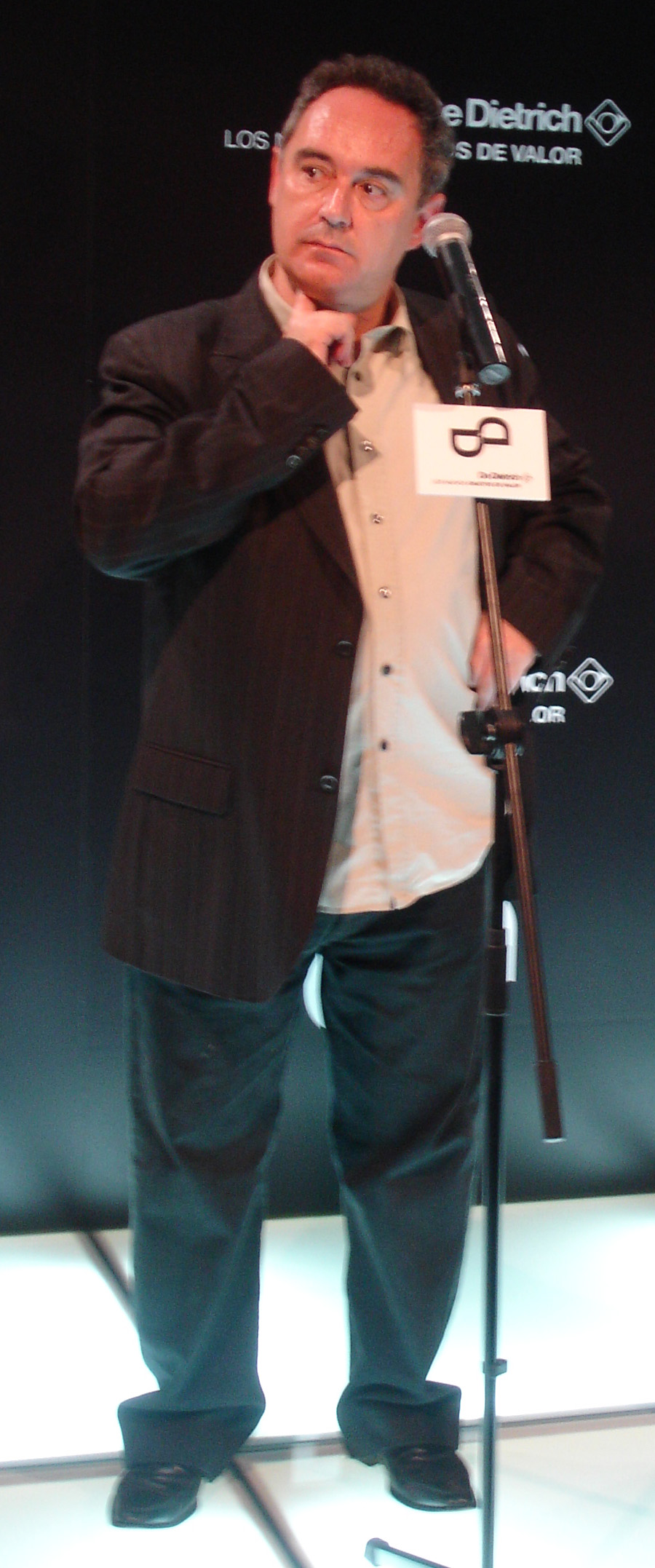
It grew up in a cove. elBulli, above Cala Montjoi on the Costa Brava, under chef Ferran Adrià, was named the world's best restaurant a record five times (2002, and 2006 through 2009) and held three Michelin stars — then closed at its peak in 2011 and became a foundation. In 2011 the field also got its reference book, Nathan Myhrvold's Modernist Cuisine, which gave it the name that stuck: modernist, not molecular.
Because "molecular gastronomy" was a label the chefs it's pinned on threw out in public. In 2006, Adrià, Heston Blumenthal, Thomas Keller and food-science writer Harold McGee co-signed a Statement on the New Cookery in The Observer:
That is the spine of the whole craft, and the reason it's worth learning honestly. The technique is real and the label was always marketing — so the first thing a serious cook learns here is to keep the chemistry and drop the costume.
elBulli closed, but its cooks scattered and conquered. El Celler de Can Roca, the Roca brothers' three-star in Girona, was named the world's best in 2013 and again in 2015. Disfrutar in Barcelona — opened by three chefs who met working at elBulli — was named the world's best restaurant in 2024. The centre of gravity never left Catalonia.
So the map points where the living scene is: Barcelona, where the diaspora still cooks, teaches and experiments — and where you can actually book a bench and learn the technique, rather than buy a museum ticket to look at where it used to happen.
This craft splits cleanly down the middle — and the split was drawn by the founders themselves, which is the strongest honest framing there is.
Sous-vide is now standard in serious kitchens; precise low-temperature cooking is simply how you cook a protein well.
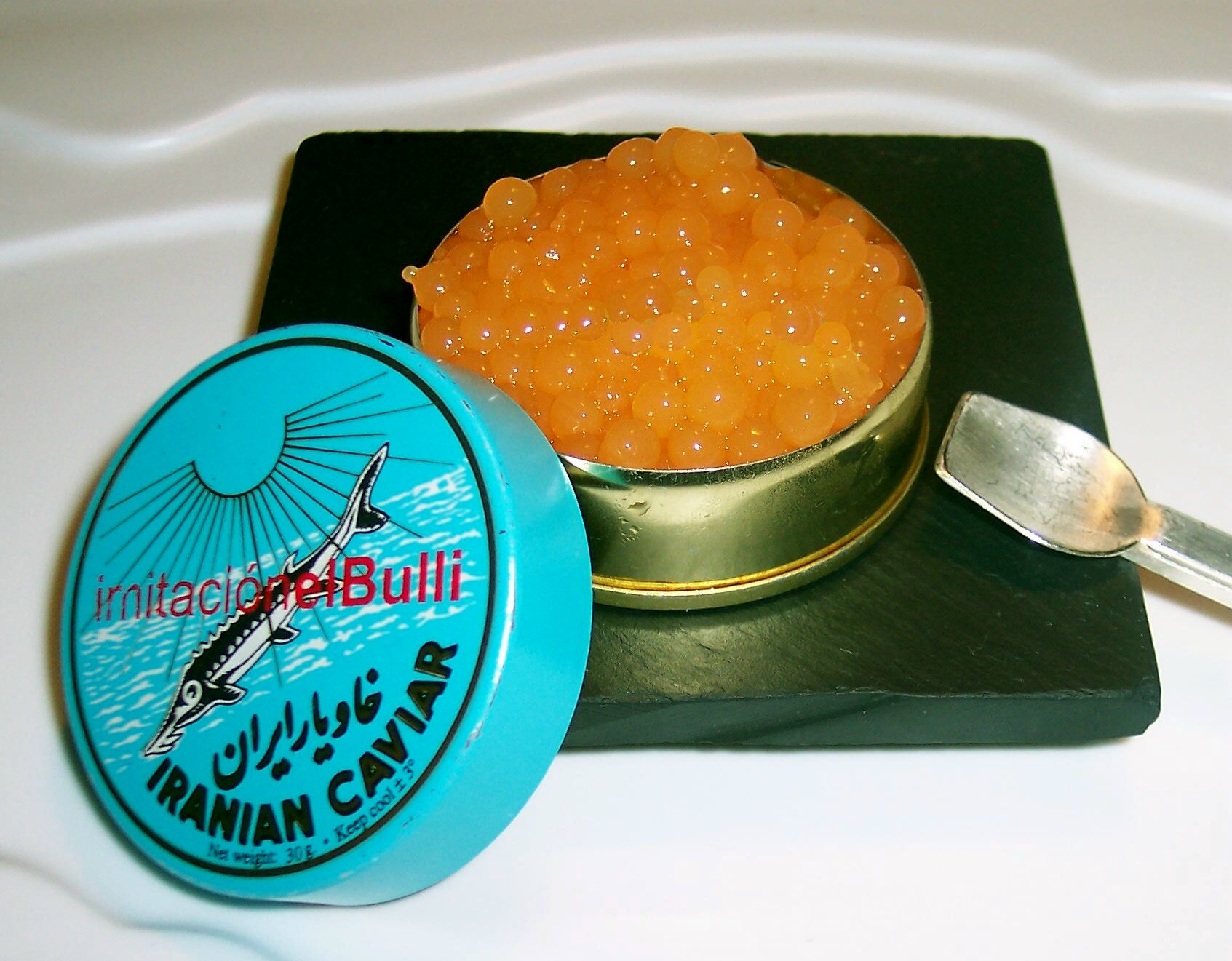
Spherification, foams and hydrocolloids are real tools with real chemistry — agar, alginate, lecithin, xanthan — that genuinely entered the fine-dining vocabulary and stayed.
"Molecular gastronomy" — a phrase its supposed pioneers disowned in a national newspaper, saying it "does not describe any style of cooking."
Spectacle for its own sake — spherify-everything, dry-ice fog, foam on foam. The 2006 statement warned specifically that liquid nitrogen "should not be used for the sake of novelty."
So the tell is simple: when a diner rolls their eyes at "molecular gastronomy," they're mocking a marketing word the actual masters rejected — not the sous-vide bath that cooked their dinner perfectly. One day versus the other is the whole craft.
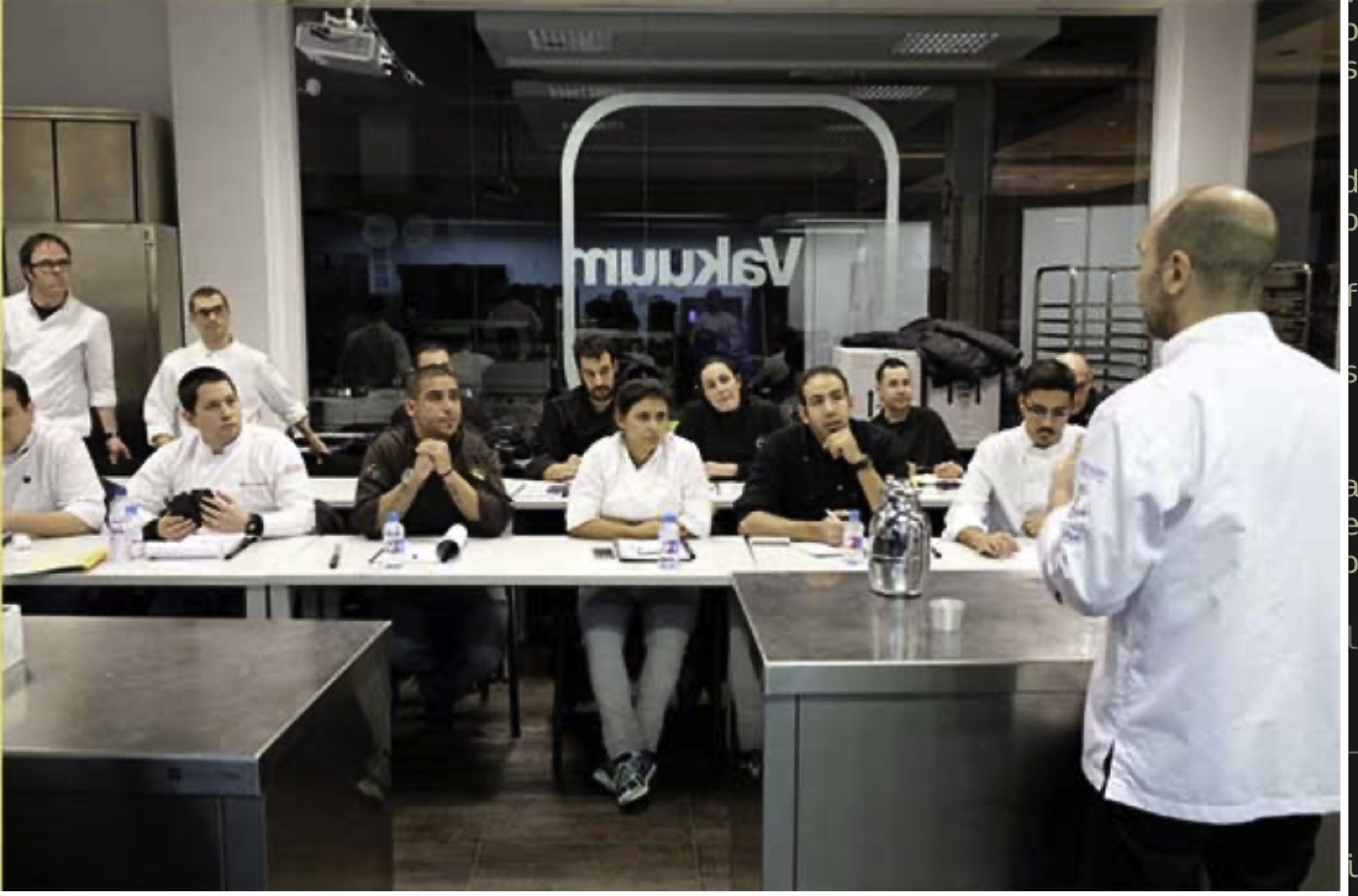
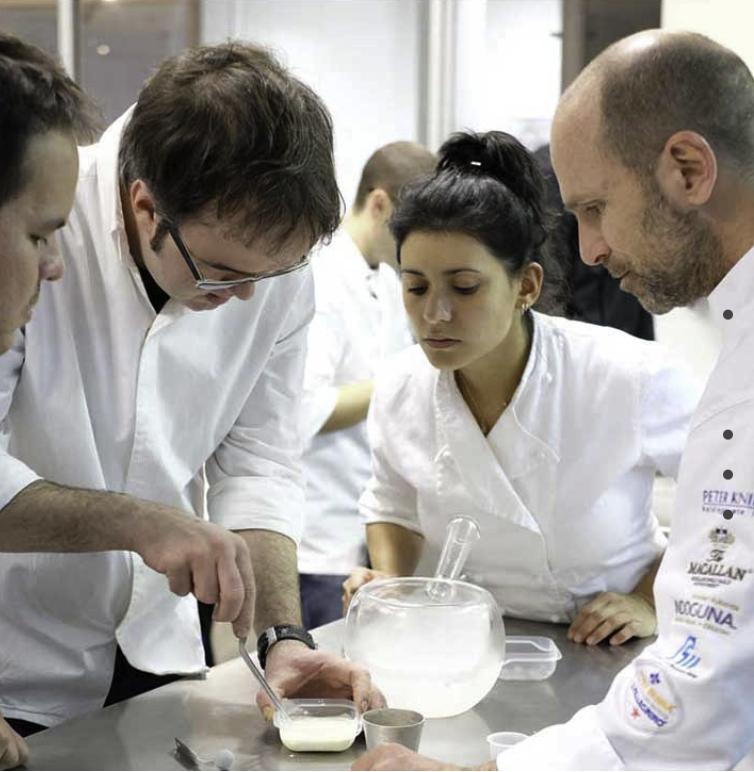
A working modernist-technique lab run by chef Martin Lippo, in the heart of the living scene. The curriculum is the real thing, module by module — vacuum & sous-vide, foams and carbonation, spherification (basic and advanced), liquid nitrogen, textures — and enrolment is genuinely open: buy an online module outright, or book an in-person class. Not a gatekept stage, not a museum ticket — a place you can actually walk into and cook.
On languageThe online courses run in English; the in-person Barcelona classes are taught in Spanish (English or French only as a private booking). The Basque Culinary Center's "Molecular Cooking" course also runs online in English — so an English speaker has a real route in without leaving the technique behind.
In your futureFine dining now assumes this vocabulary. A cook who genuinely understands spherification, precise temperature and hydrocolloids — not as tricks but as tools — carries a portable, in-demand skill into any serious kitchen.
Also real, if not the pick: the Basque Culinary Center in San Sebastián — an institutional heavyweight with avant-garde and "Molecular Cooking" courses (some in English) and open-enrolment short courses. The Upper Room / Sous Vide Australia in Melbourne teaches in English, but leans sous-vide rather than the full modernist range. Not schools, honestly: elBulli1846 is a museum you visit, not a place you study; and El Celler de Can Roca's "stage" is a selective, gatekept placement — they pick you from a CV and a photo — not a course you can book.
Martin Lippo×EducatedTraveler
Everything above is the open door: buy Martin's modules, learn them at your own pace, no gatekeeper. Once a year we also put the whole toolkit into a single week in his Barcelona lab — thirty-five hours, in English, ten to fifteen working cooks at one bench. The first one runs this October, and it's built for chefs coming off boats.
Film coming — Martin, from the bench, shot in his lab this October. The Circle sees it first.
See the week — Barcelona, this October →"Science and Cooking: A Dialogue" — Harvard University, with Ferran Adrià, Harold McGee and José Andrés. The master himself, where modernist cuisine met the academy. Plays right here.
I'm Arnaud. I cook for a living, and I built the Atlas because I got tired of good-looking websites that turn out to be nothing. Here's the bar a place has to clear — and what I'll tell you straight when it doesn't.
Keep the chemistry. Drop the costume. That's the whole craft.
Or find your people — the Circle is how these skills become real trips: the community first, then the place.
Join the Circle →