Schools in Tarifa
Freeride Tarifa
IKO kitesurf course (max 2-4 students per instructor)- Where
- Los Lances and Valdevaqueros, Tarifa
- How long
- 3 hours a day, booked for 1 to 5 days (group)
- Format
- Group, couple, semi-private or private; radio headsets
- Taught in
- English (all instructors speak it)
- Class size
- 4 students per instructor at most
- You leave with
- Level validated on the IKO App
- Price
- €350 5 days of 3-hour group lessons, per person; gear and insurance incl.
Who teaches itKitesurf instructors: Magali, Basti, Johanes. their teacher page ↗
An IKO-affiliated kite school teaching at the Los Lances and Valdevaqueros beaches with a maximum of two to four students per instructor and radio-headset instruction.
Facts read on the school's own pages, 17 Sep 2026.
 Matos TarifaIKO kitesurf courses, beginner to advanced
- Where
- Playa de los Lances, Tarifa
- How long
- 3 or 4 hours per session
- Format
- Semi-private, private or group; radio helmet; pay after each session
- Taught in
- French, English and Spanish
- Class size
- 4 students per instructor at most (group course)
- Price
- €45 per person per hour, semi-private (2 students, 2 kites)
Who teaches itInstructors: Mat, Mathi, Max. their teacher page ↗
A Tarifa kite school whose instructors are certified by the IKO and the Andalusian Sailing Federation, teaching every level from first discovery to advanced coaching with radio helmets, with lessons year round and progression and Tiki kite camps on dated weeks.
Photographs from the school
Sent by the school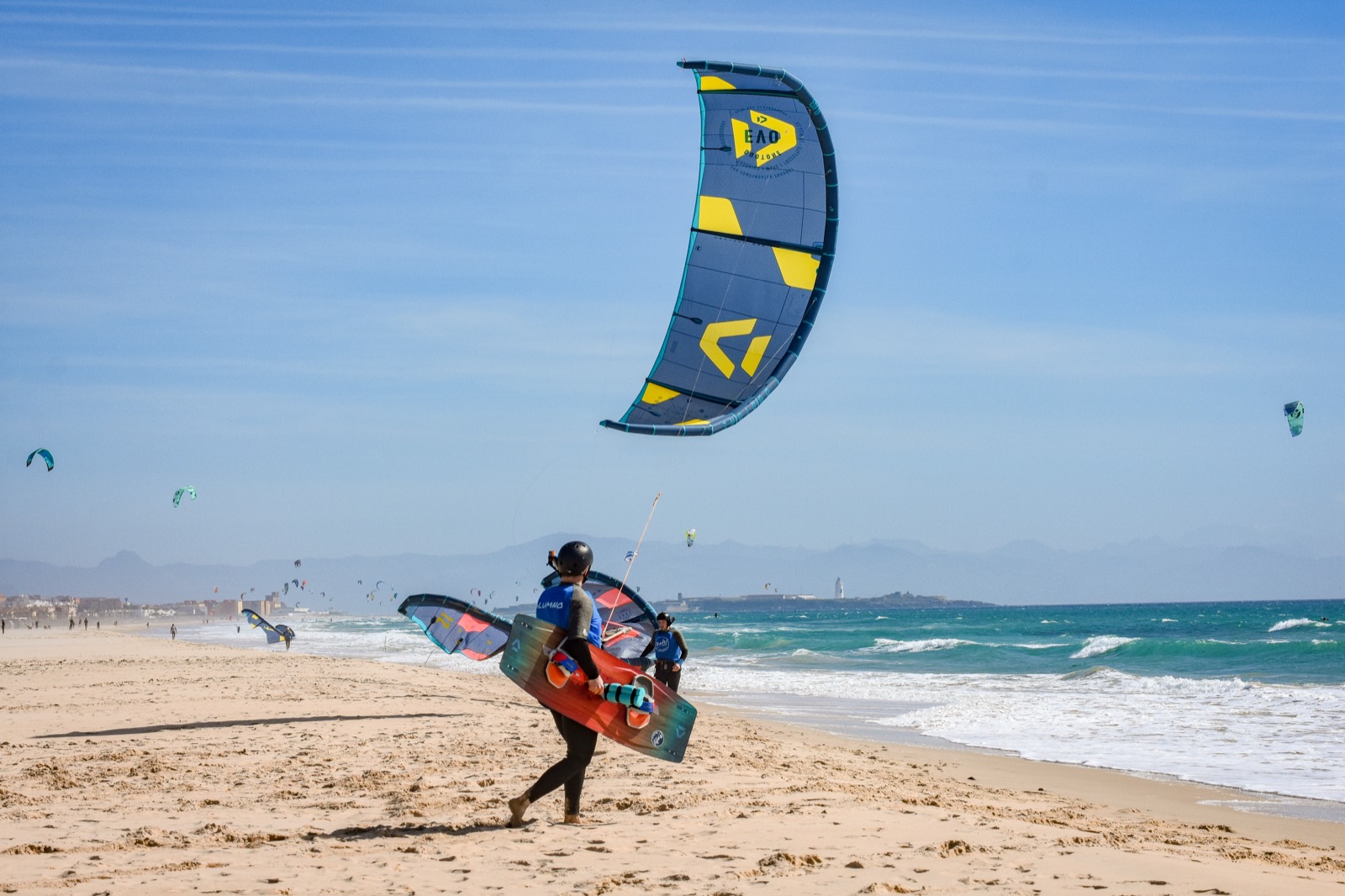
The kite already up, the board under one arm, and the walk down the sand — in the same sky as everyone else's. This is the beach on an ordinary day. 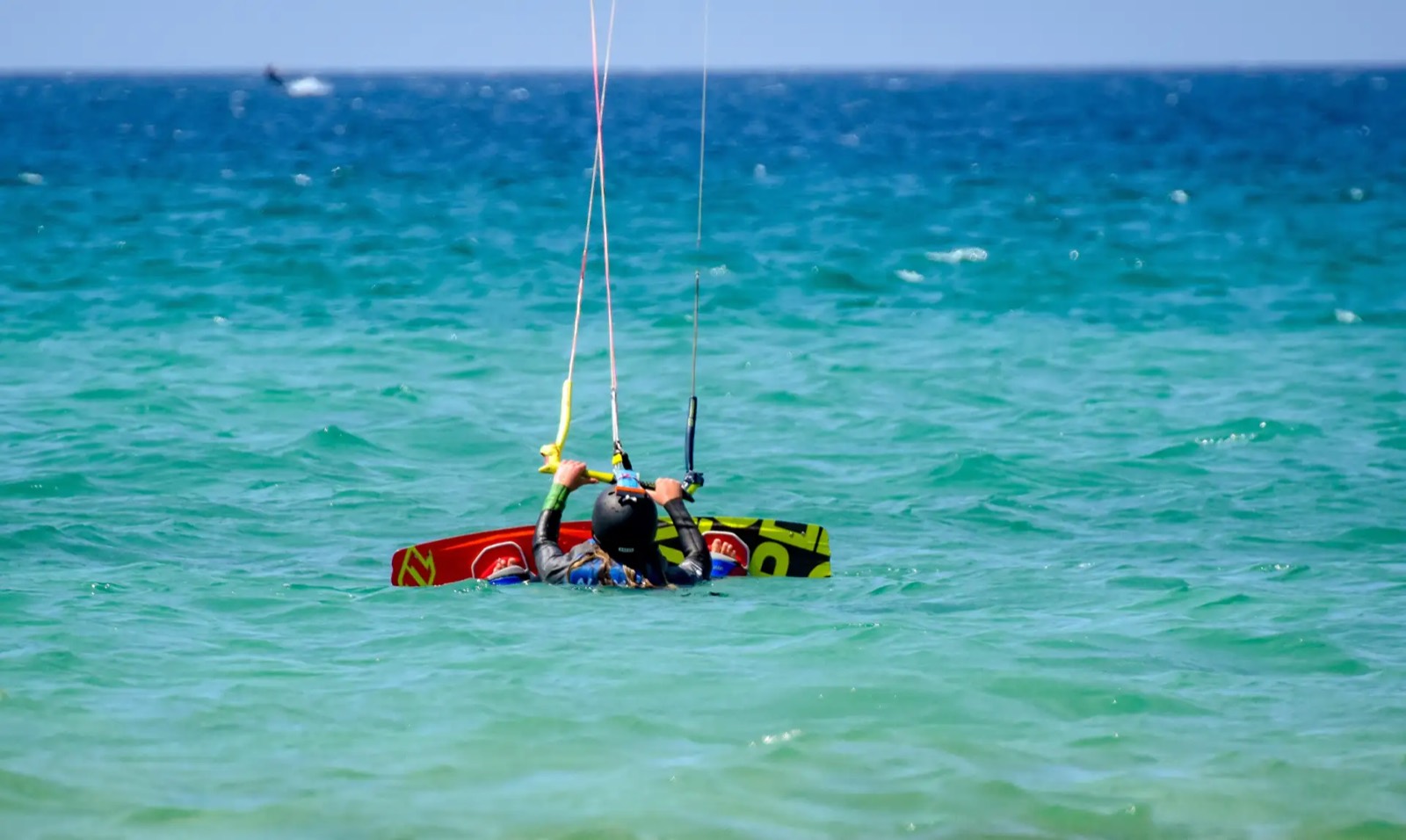
The waterstart, which is where most of a first week actually goes: in the water, board on, waiting to be lifted out rather than dragged along. 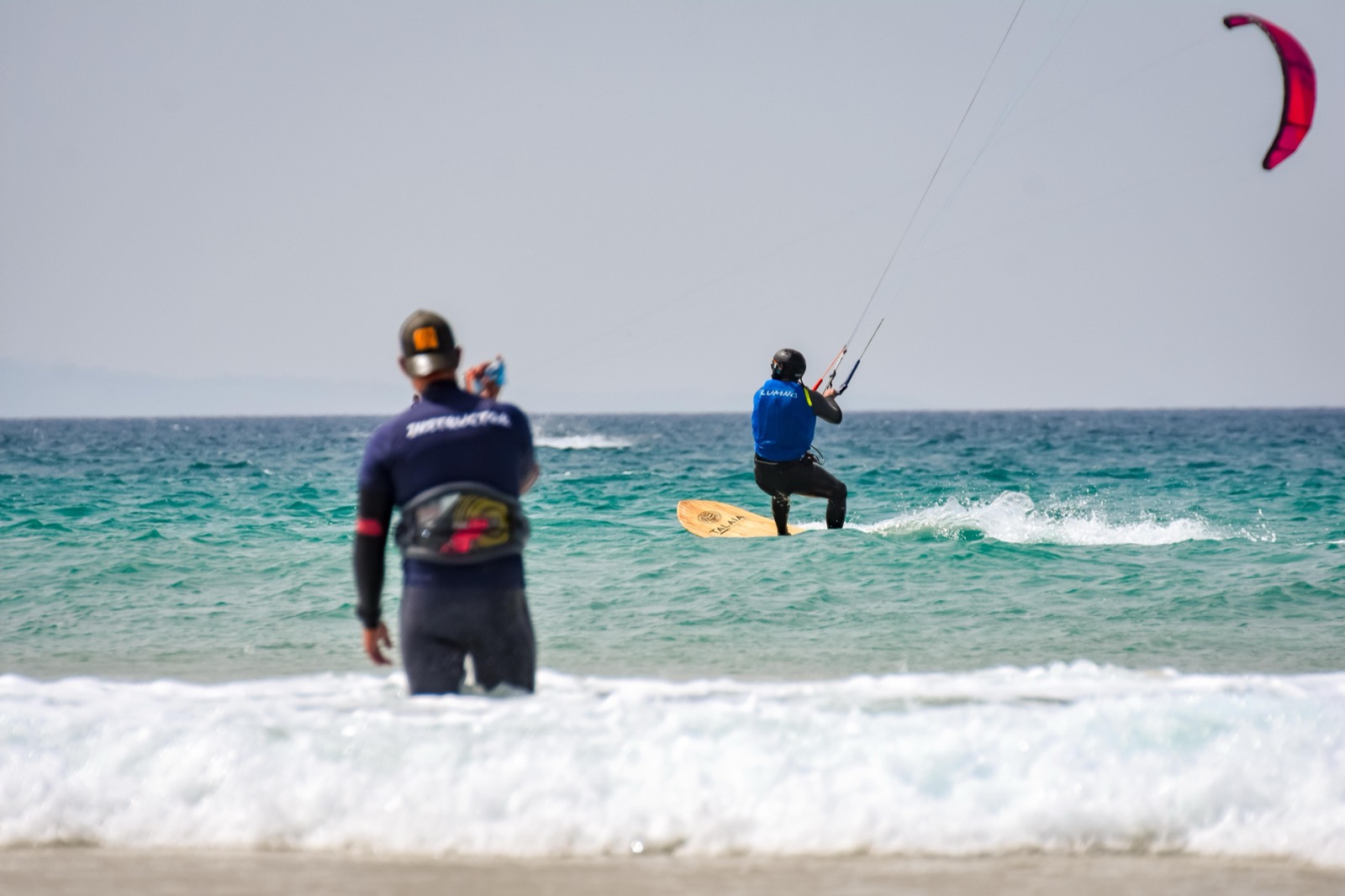
The instructor stays in the shorebreak — the word is across the back of his wetsuit — while the student rides past on his own. That is what the radio helmet is for: the coaching reaches the water without the coach. 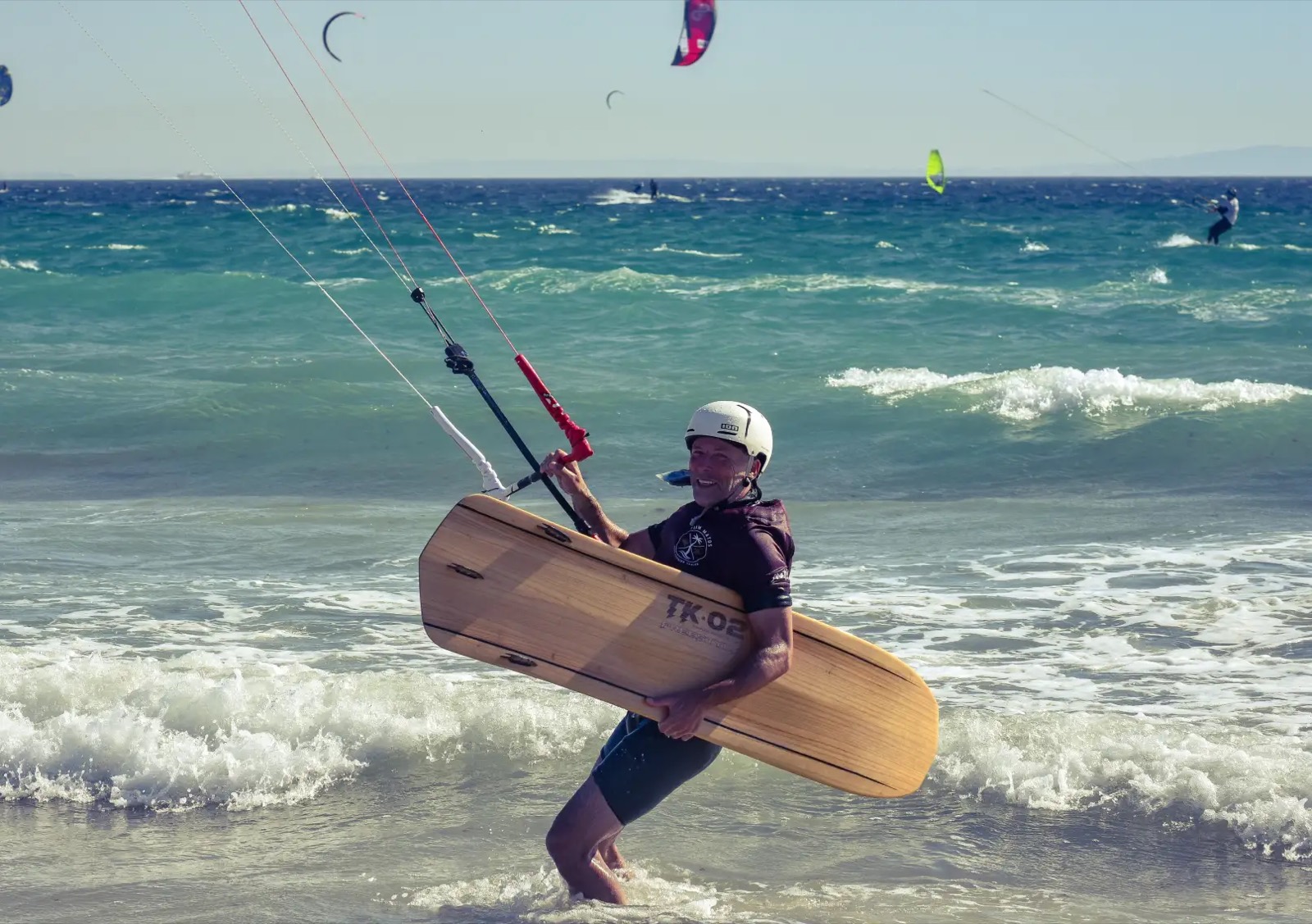
Walking in from a Tiki session on a wooden directional board. The Tiki and progression camps run all year, not only across the summer. 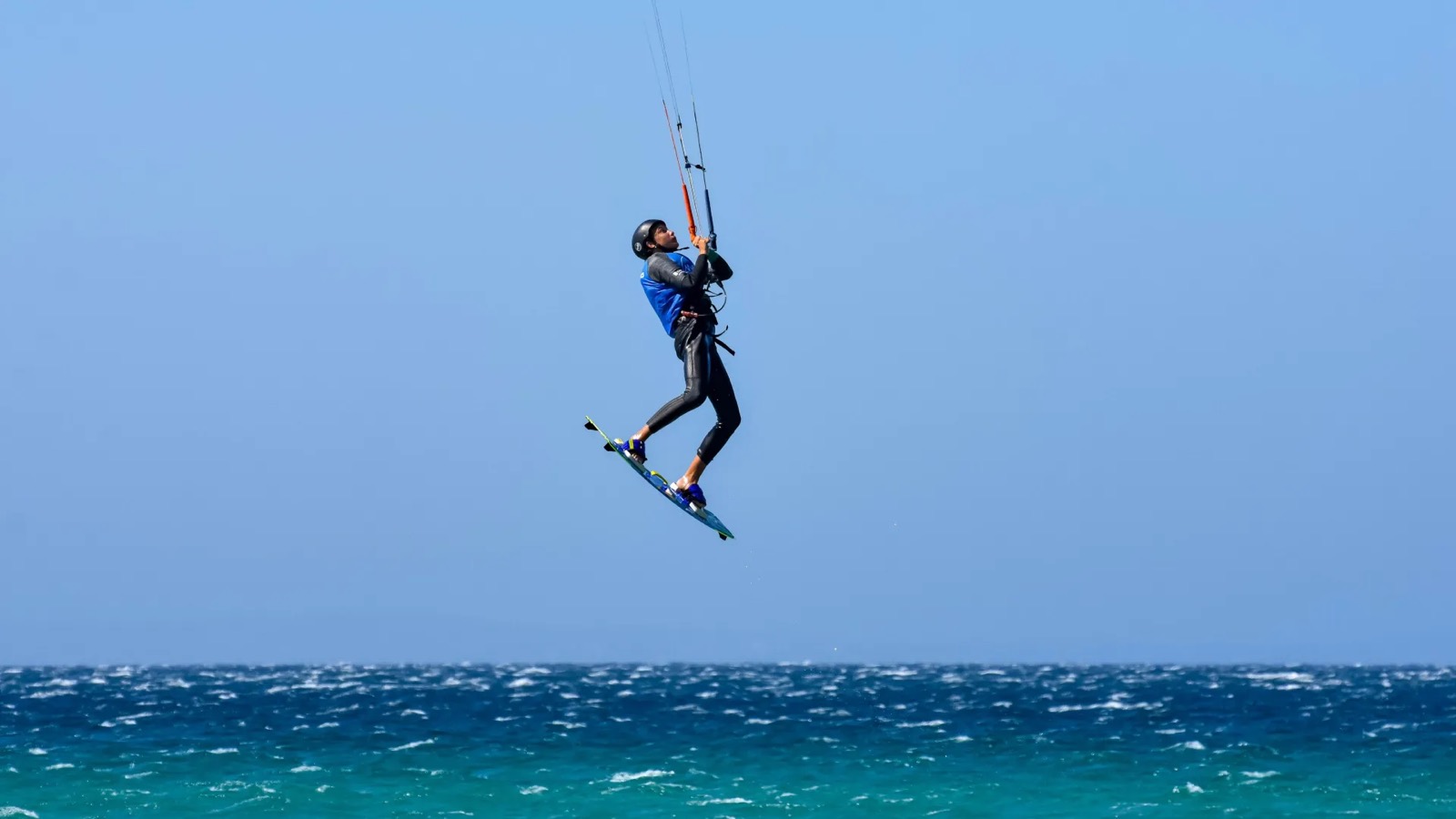
Jumping is taught here rather than left to be worked out — eyes up on the kite, board kept on the feet. It is its own course. 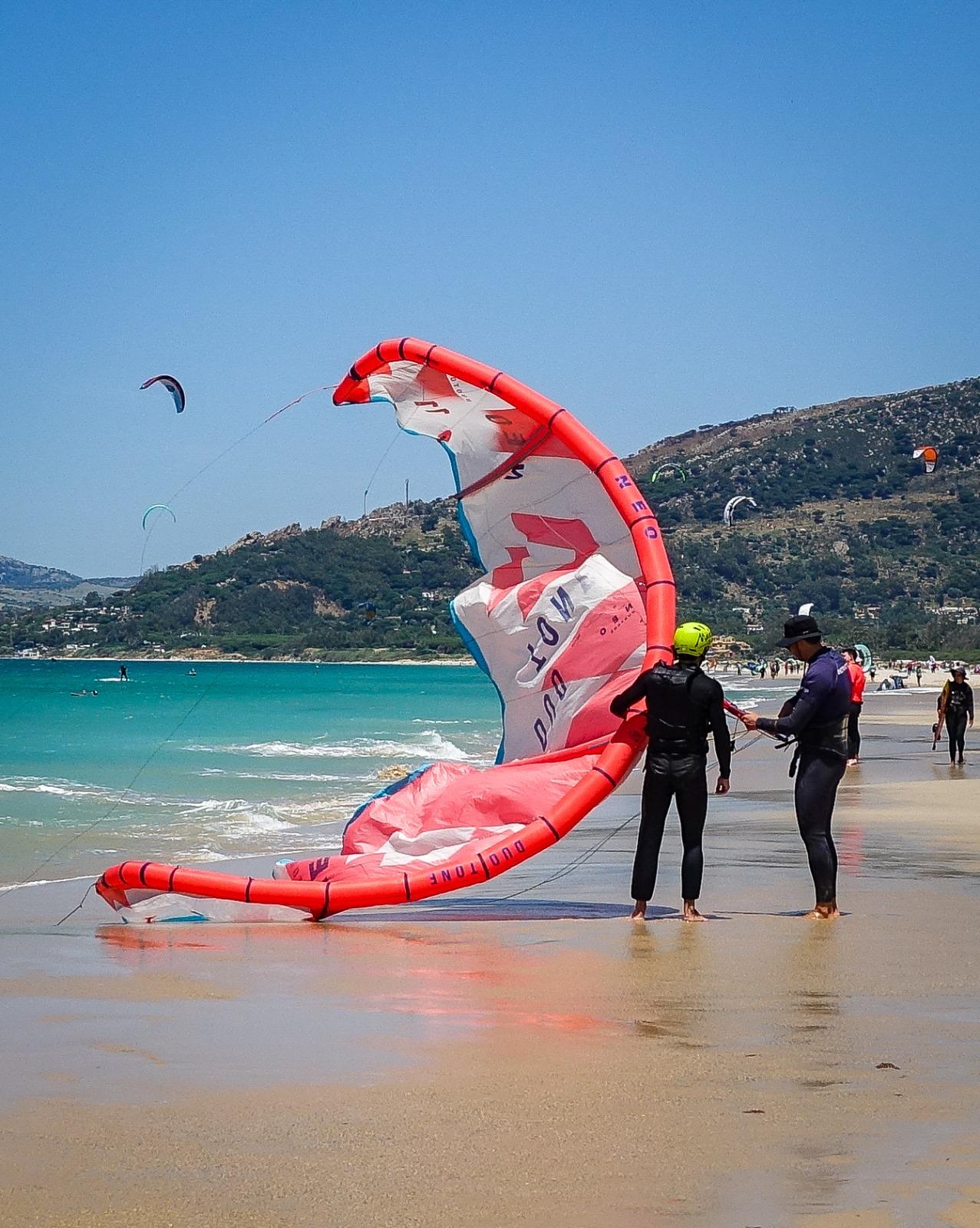
Before any of it is fun, the kite has to come down and go up again on a crowded beach. The instructor keeps the bar; the student stands at his shoulder and watches it done. 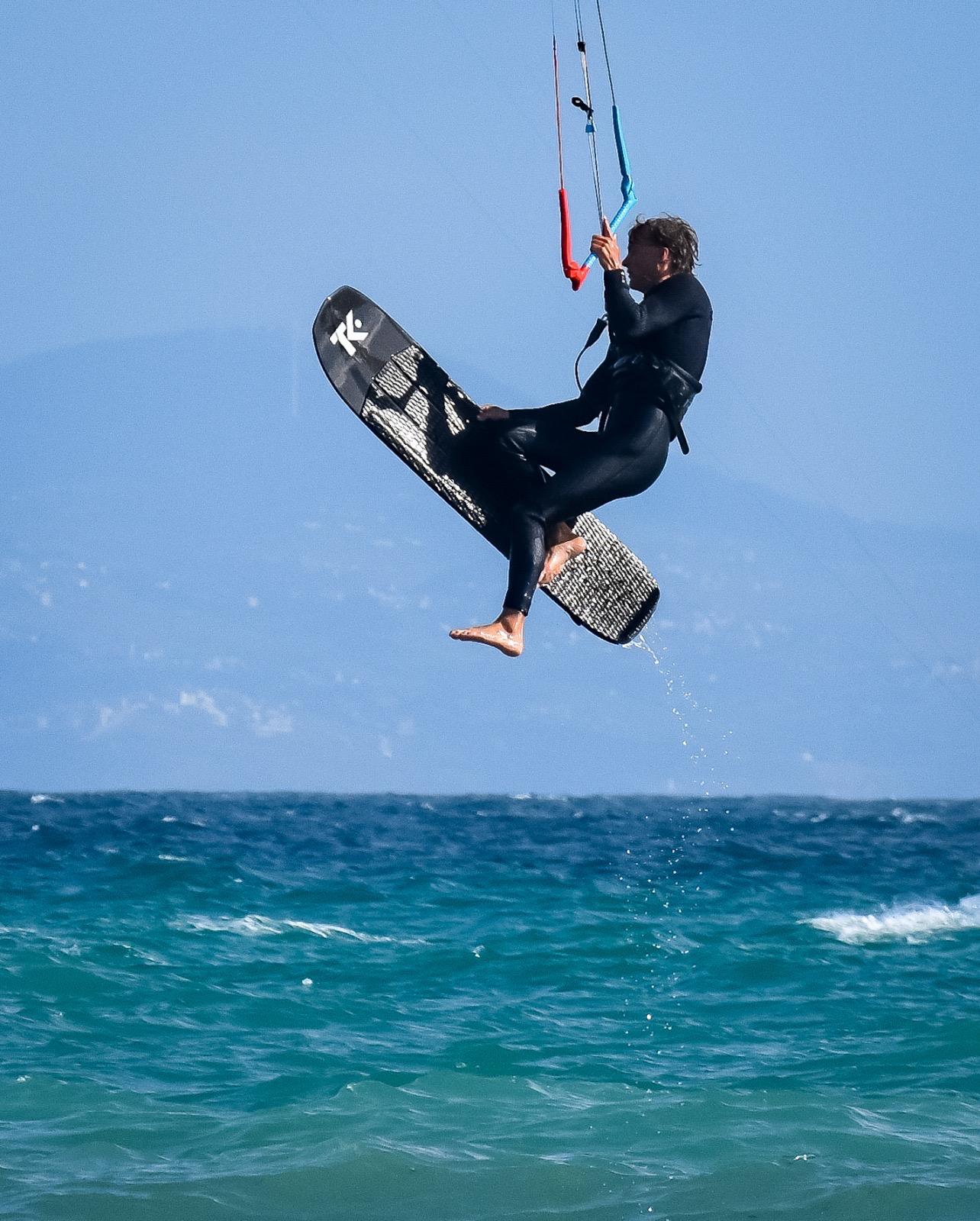
Airborne, with the board still under control. This is what the third year looks like. 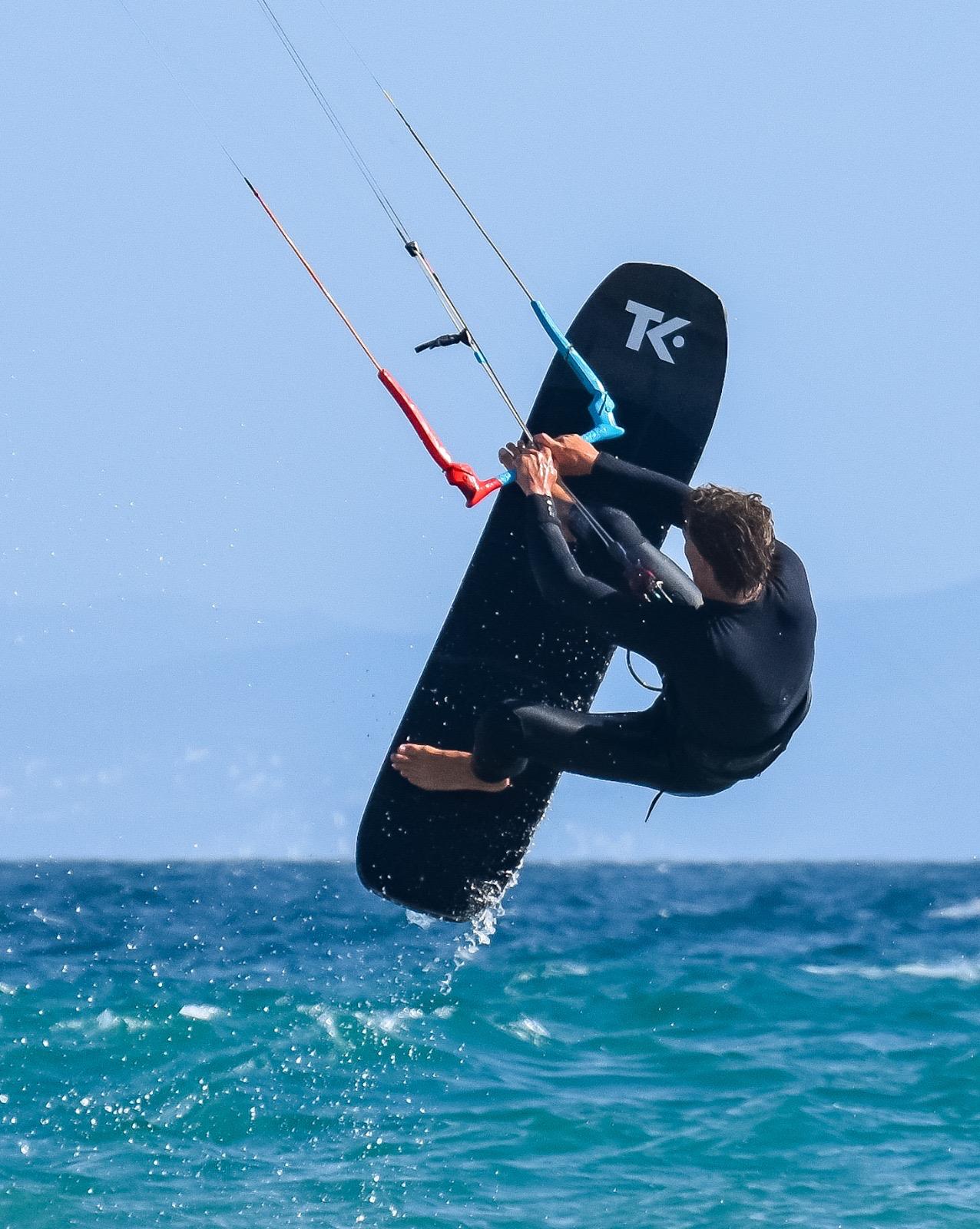
The same jump a moment later, with a hand on the board. This is the part that is taught: not the height, but what you do with the time it buys. 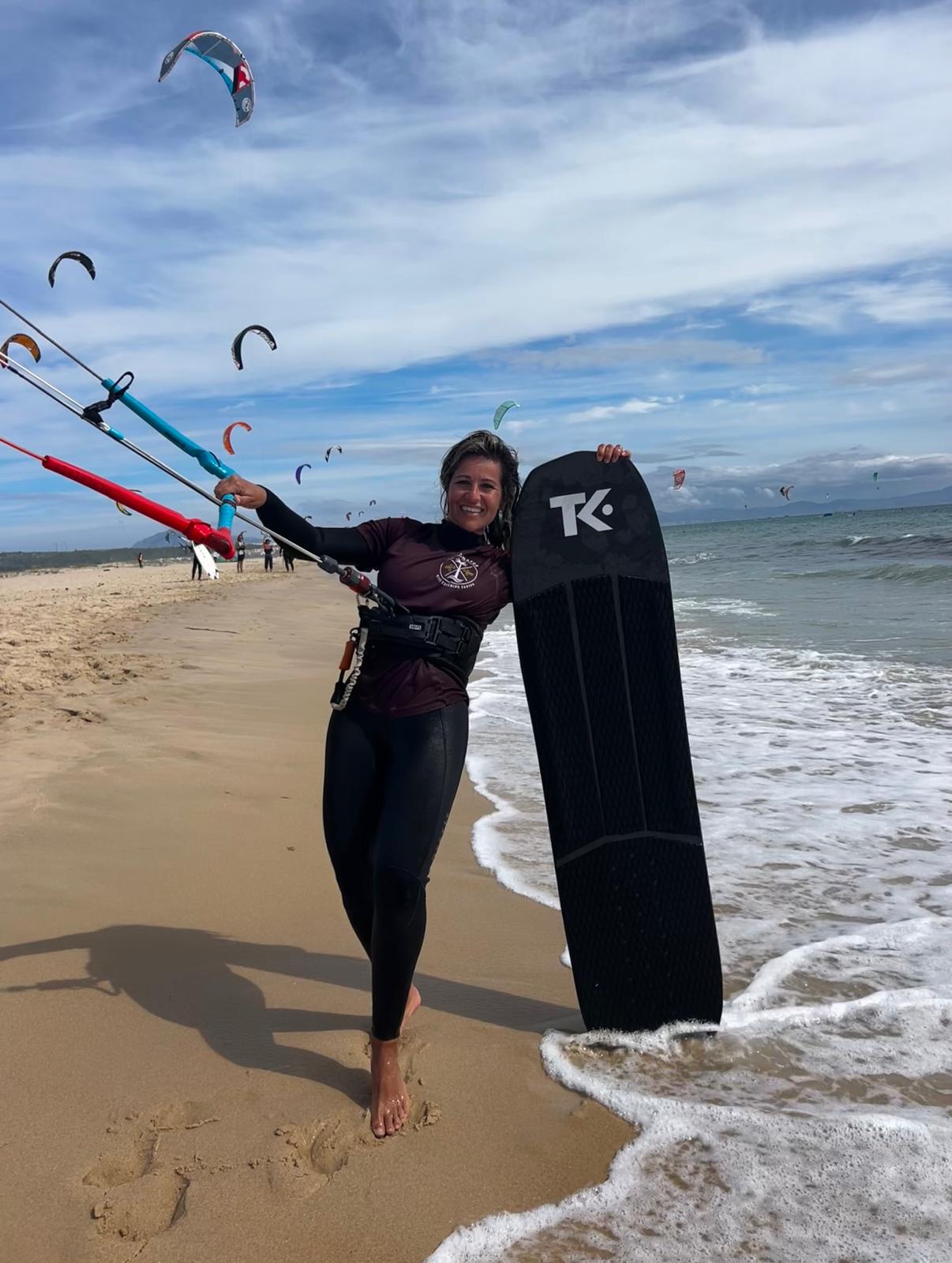
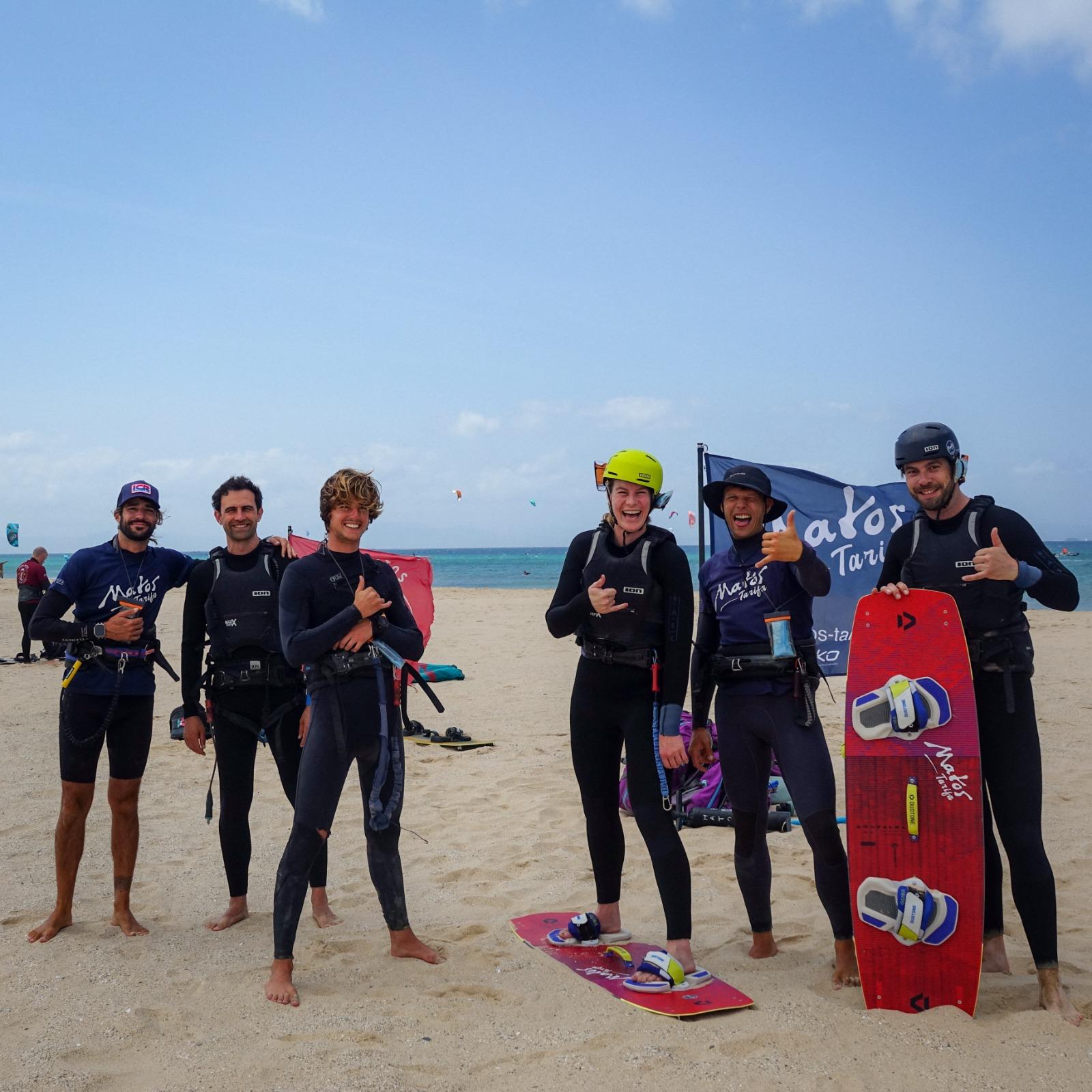
Coming in, board under one hand and the kite still flying off the other. Count the kites behind her: this is an ordinary afternoon on Los Lances. Instructors and students together at the end of a session, in front of the school's own flag. Who teaches is a question this Atlas asks of every school; this is Matos Tarifa answering it with a photograph. 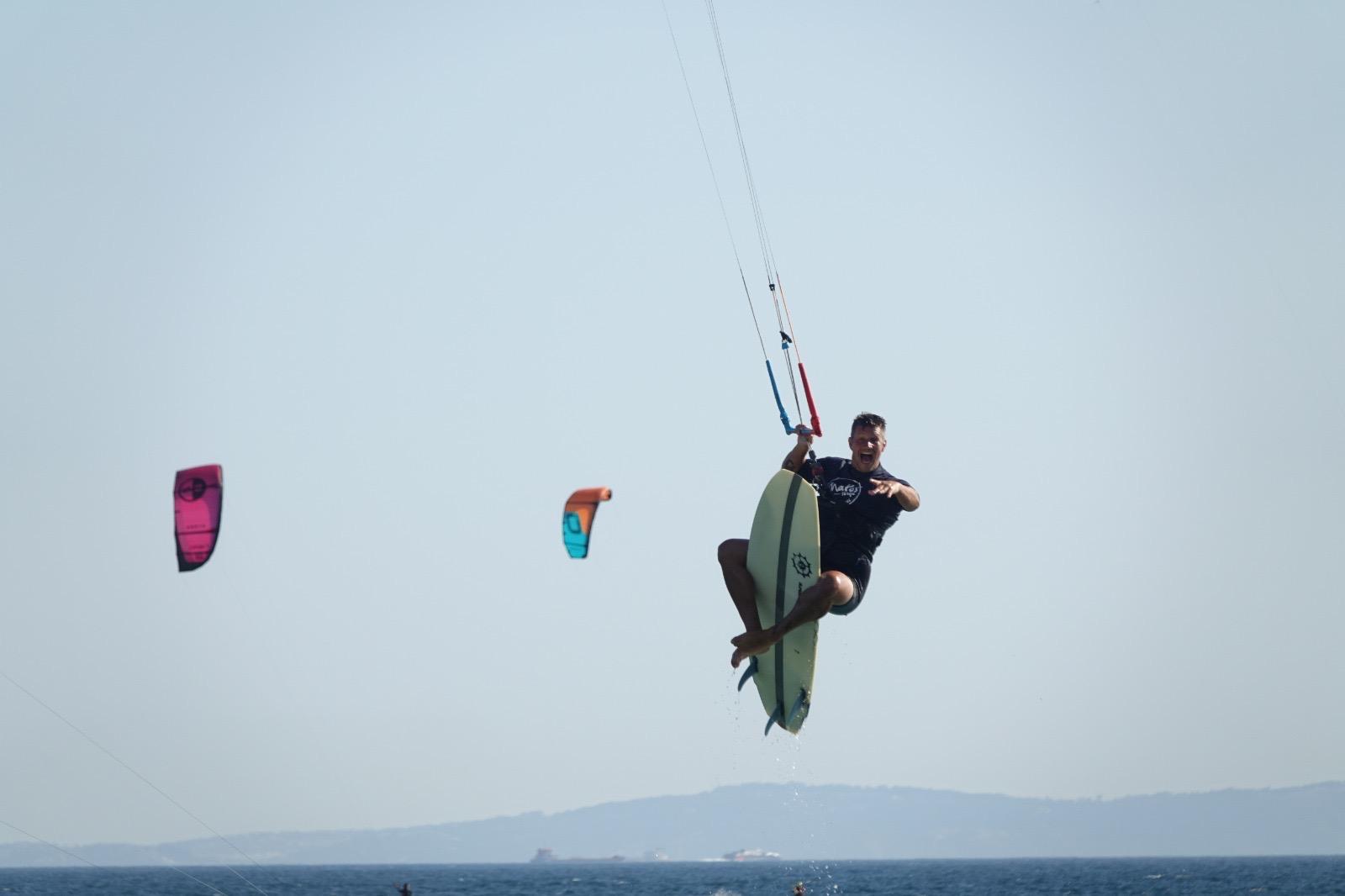
Strapless, off the water, with the far shore of the strait behind. One of the ten pictures the school sent. Facts read on the school's own pages, 17 Sep 2026.
Subcielo Kite School
IKO-certified group, semi-private and private kitesurf courses- Where
- Camping Valdevaqueros, Tarifa
- How long
- 2 or 3 hours per class
- Format
- Private, semi-private or group, taught by the two owners
- Class size
- 4 students per instructor at most (group course)
- Price
- €100 per person, 2-hour semi-private class; gear and insurance included
Who teaches itInstructors and founders: María Victoria López, Manuel Beltrán · Instructor: Gustavo Arrojo. their teacher page ↗
Founded in 2010 by instructors teaching since 2005, on the Valdevaqueros beach, this IKO-certified school offers group, semi-private and private courses with an IKO certificate on completion.
Facts read on the school's own pages, 17 Sep 2026.
KBC (Kiteboarding Club) Tarifa
IKO kitesurf courses with radio instruction- Where
- Playa de Los Lances, Tarifa
- How long
- 12 hours over 4 days (group beginner course)
- Format
- Radio helmet coaching; private, semi-private or group of 4
- Taught in
- Spanish and English
- Class size
- 4 students, booked as a private group of 4
- Price
- €324 per person, 12-hour group beginner course; booked as a group of 4
Located at Los Lances Norte in Tarifa, this kite school uses IKO-certified coaches and radio training, with kitesurf and wingfoil courses plus an associated hostel.
Facts read on the school's own pages, 17 Sep 2026.