Atlas / Craft & Art

Japanese Knife-Making

The blade that lost its war in 1876 and moved to the kitchen — and the one souvenir you're meant to use until it wears out.

In a day at a real fire you hammer the guided steps while a master keeps the dangerous ones, and you carry home a single-bevel knife you helped forge. Almost everything else — the "ancient samurai steel," the acid-etched "Damascus" — is marketing the smiths never signed.

What it actually is

Mostly fire — and knowing which parts aren't yours yet

Forging a blade is a real, physical sequence: heat carbon steel to glowing, hammer out the shape and the bevel, harden it in the quench, temper it so it won't shatter, then grind, sharpen on water stones, and fit a handle. In the Japanese trade those aren't one person's jobs — forging, sharpening, handle-fitting and even engraving the maker's name belong to different specialists, each doing one thing for a lifetime.

So the honest gap is this: a licensed swordsmith serves a five-year apprenticeship and passes an eight-day national exam held once a year. A traveller's "make your own knife" day is a guided taste of that. The one-to-two-hour sessions are mostly sharpening or fitting a handle; a real three-to-six-hour course lets you actually heat, hammer and harden — with the master keeping the stages that can hurt you. That's not a knock. It's the honest deal, and it still sends you home with a blade your own hands shaped.

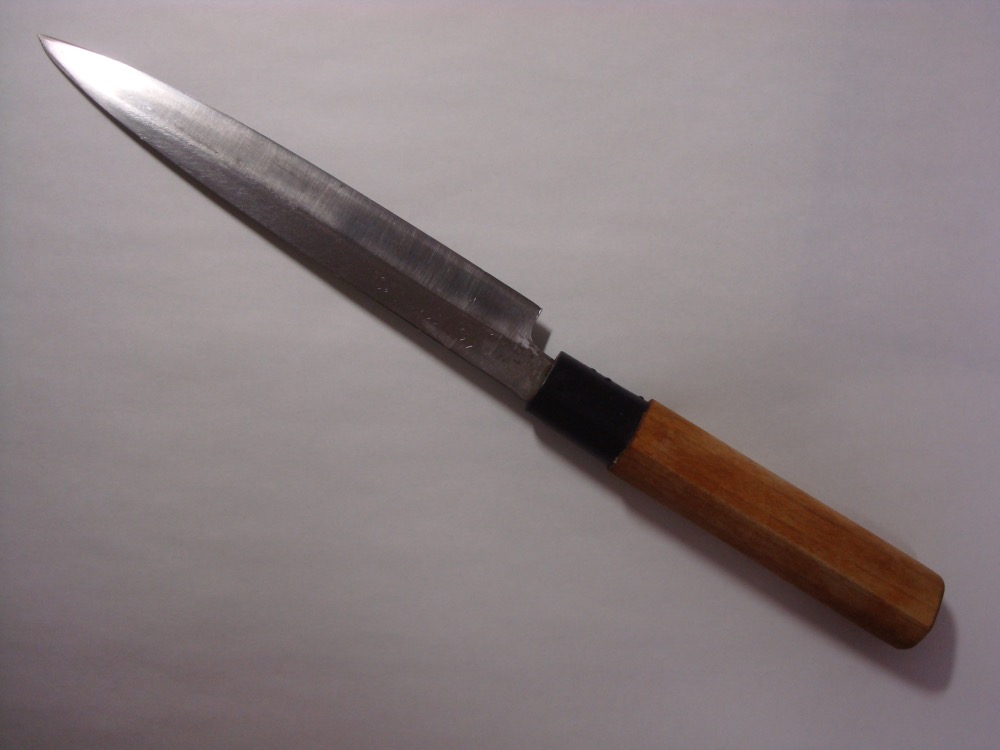
A yanagiba, a single-bevel Japanese kitchen knife
A yanagiba — ground on one side like a chisel, the back left hollow.
Public domain
The part that surprises everyone

Four things nobody tells you about a Japanese blade

01

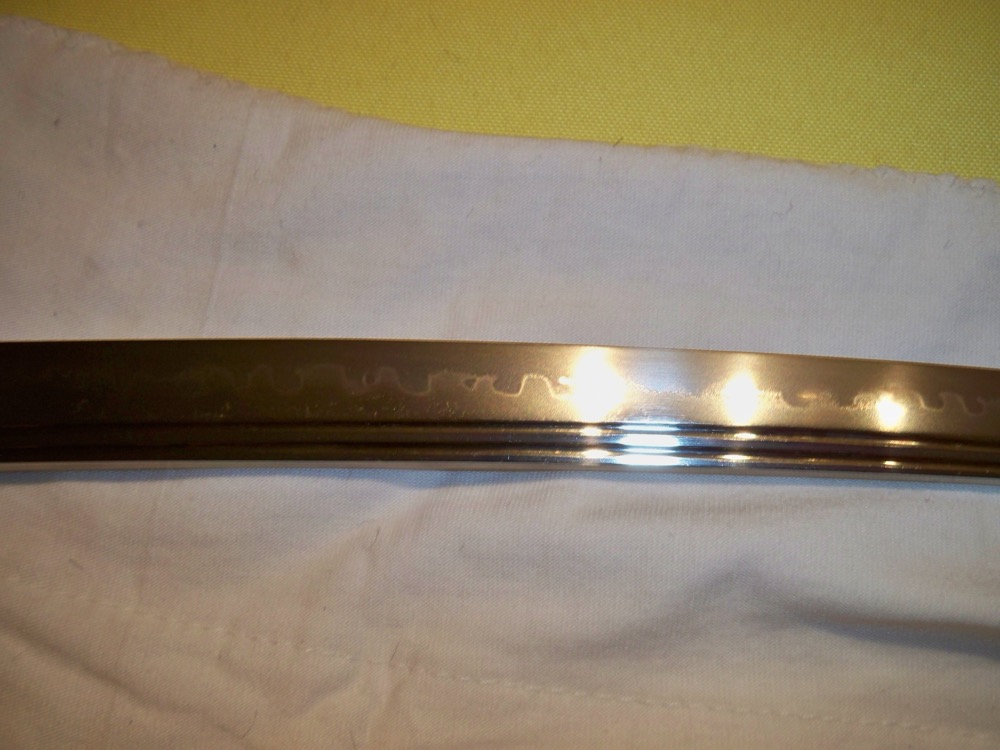
The wavy line on a fine blade is a hardness boundary you can see. The smith paints clay thick on the spine and thin at the edge; in the quench the edge cools fast and turns glass-hard, the back cools slow and stays springy. The beautiful hamon is a by-product — as the reference books put it, "the appearance is purely a side effect" of making the edge hard and the spine tough.

02

The traditional steel is smelted over three days in a furnace built to be destroyed. In the tatara, workers layer iron-sand and charcoal for about 72 hours — roughly nine tonnes of sand and eleven of charcoal for some two tonnes of steel — then break the clay furnace open to get it out. It survives at essentially one place, a tatara in Shimane, fired only in winter.

03

In Sakai, the forger never sharpens. A single professional knife passes through separate lifelong specialists — one who forges, one who sharpens, one who fits the handle, one who cuts the name — each doing their single thing for a career. It's an assembly line made of masters.

04

Japanese kitchen knives are sharpened on one side only. Like a chisel, with the back hollow-ground — the geometry that lets a yanagiba peel a slice of sashimi so thin it's almost see-through. Western knives are sharpened both sides; this is a different idea of what an edge is for.

Sources: Wikipedia · hamon · Wikipedia · tatara · Osaka tourism · Sakai · Wikipedia · Japanese kitchen knife.

Where it comes from

The sword didn't die in 1876. It moved to the kitchen.

Seki, in Gifu, has forged blades for about 800 years, since the Kamakura period — its Mino-school swords earned the old line that they "do not break, do not bend, and cut well." That's the romance. Here's the honest version of what happened next.

A katana blade showing the wavy hamon temper line
A katana's hamon — the line where hard edge meets soft spine.
Photo: Samuraiantiqueworld · CC BY-SA 3.0

The tidy story says the 1876 sword ban turned samurai swordsmiths into knife-makers overnight. It's not quite true. Smiths had already spent the peaceful Edo years making tools — the nokaji — and the Haitōrei Edict of 1876 simply finished the job: swords "lost their utilitarian role, and many swordsmiths were forced to turn to the production of farming implements and kitchen cutlery to survive."

Many swordsmiths made kitchen knives and things like that to supplement their income. Paul Martin, Japanese-sword expert · HISTORY

And carry this honest correction with you: not every Japanese knife is made by an ex-samurai from sword steel. The shift was gradual and economic, and today's knives are overwhelmingly not tamahagane — the premium carbon steels are its industrial descendants, and real tamahagane is now smelted only a few times a year, essentially for swords. The lineage is real. The marketing that flattens it into "samurai steel" is not.

The receipts, claim by claim
  • ~800 years, since Kamakura: Seki's Mino-den sword lineage and its "not break, not bend, cut well" reputation — Nippon.com.
  • The gradual pivot: swordsmiths became tool-making nokaji in peacetime; the Haitōrei Edict (1876) then pushed them to farm tools and kitchen cutlery to survive.
  • Not sword steel: tamahagane is now made only a few times a year, essentially for swords; kitchen knives use industrial steels descended from it — tatara / tamahagane.
The strangest turn in the story

Where it lives now

The craft didn't retreat into a museum — it spread into working blade towns, each one traceable to the sword era. Seki (Gifu) now holds some 300 cutlery businesses and makes about half of Japan's cutlery exports — ranked with Solingen and Sheffield as one of the world's three great blade cities. Sakai (Osaka) is the professional kitchen-knife capital, built on that forge-and-sharpen division of labour. Echizen / Takefu (Fukui) carries a 14th-century tradition in a village of co-operating workshops. And Sanjō–Tsubame (Niigata) is Japan's metalworking heartland.

That's the whole point, and the reason the place we'd send you isn't a gift shop. The living thing is in forges you can walk into — and, in one of them, pick up a hammer beside the smith.

The honest read

What's true, and what's sold

Few crafts are romanticised as hard as this one, and the romance sells a lot of knives. So here's the fight, both corners named.

✓ What's genuinely true

The geometry and the lamination are real engineering. The single-bevel edge and the hard cutting core clad in softer steel aren't marketing — they're why these knives cut the way they do.

A hand-forged knife by a named smith is real, and rare — identifiable precisely because the volume market is machine-made. Steel, smith, city: those three answers are the honest authenticity test.

✗ What's oversold

"Damascus." The pattern doesn't make a blade sharper — the edge is set by the core steel, the geometry and the heat treatment, not the layers. Much "Damascus" on cheap knives is acid-etched or printed onto plain steel.

"Hand-forged / Made in Japan." That label names the country of assembly, not the method — Seki is also a mass-production hub turning out thousands of identical machine-made blades. And the one-hour "forge your own knife" is often just sharpening.

The tell, in the end, is a name. A real knife is signed by a person; a marketed one is signed by a brand. Ask which steel, which smith, which town — and the marketing goes quiet, because a factory can't answer in the first person. That single habit protects you better than any "artisan" sticker ever will.

The sources, in full
  • Pattern steel isn't inherently better: a metallurgist's testing shows layering doesn't improve the edge; core steel, geometry and heat treatment do — Knife Steel Nerds (Larrin Thomas).
  • Single-bevel + laminated construction are genuine, functional features — Wikipedia.
  • Seki as a mass-production centre (~300 businesses, ~half of Japan's cutlery exports) alongside its artisans — Nippon.com.
  • Tourist "make your own knife" tiers: 1–2 hr = sharpening/assembly; 3–6 hr = real hammering — Japan-guide.
Where we'd send you

The source — with the catch shown

★ Our pick for this craft

Workshop Kurogane — Nobuya Hayashi

Shimanto, Kōchi · Shikoku · Tosa blade country · a day to six days · English-run

Nobuya Hayashi trained for years under his master Mitsunori Okada, a tamahagane specialist; his working forge sits on the Shimanto river in Tosa blade country — a nationally designated craft whose signature is free-forging, shaping hot iron with no mould. Best of all, it's English-run: Hayashi teaches in English himself, no interpreter between you and the fire. On the one-day you personally forge, grind, and — the part most places keep for themselves — harden your own blade in the quench, and carry it home the same day. On the six-day course you go further back still, smelting your own steel from iron-sand before you forge it.

And it's in EnglishHayashi runs the workshop in English himself — the strongest, lowest-friction English pathway of any real forge in Japan, and the reason you actually learn rather than watch.

⚠ The catch, said three ways

It's a guided day, not an apprenticeship. The master keeps the most dangerous stages and puts the final whetstone edge on; the one-day uses modern knife steel — the traditional tamahagane only comes on the six-day course.

It's a remote countryside forge, not a knife town. Deep in Shikoku, ~20 minutes from the nearest small station — Kōchi is famous for forged tools, while Seki and Sakai carry more renown for kitchen knives you can stroll among.

The price, plainly: ¥44,000 for the one-day, ¥330,000 for the six-day tamahagane course.

In your futureYou leave with a single-bevel knife you forged and hardened with your own hands, and the honest feel of an 800-year craft in them. It's the one souvenir you're meant to wear out — so take it home and cook.

How you'd actually get in

Book direct through the workshop — a published Wednesday-to-Sunday schedule runs roughly September to May, publicly bookable, no experience required. Confirm the current dates and price with them before you fly, and if you want the full tamahagane arc rather than the one-day, say so when you book — it's a different, longer course.

Also real, if not the pick: Asano Kajiya (Hashima, Gifu · English) — a government-certified swordsmith in the Seki blade heartland who forges a kitchen knife with you and, rare among these, teaches in English himself (~6.5 hrs, blade home the same day, from about US$317); the one honest gap is that the artisan, not you, does the hardening. Takefu Knife Village (Echizen, Fukui · Japanese) — a real 6-hour full forge where you do nearly every step, including the quench, for ¥20,000, but the guidance is in Japanese. And Sakai (Osaka) — the kitchen-knife capital, but for visitors it's mostly a town tour plus a sharpening lesson and an optional custom order, not forging your own blade.
Go deeper

See it, hear it, read it

A ~30-minute film following Sakai master smith Satoshi Nakagawa forge a traditional knife start to finish — real fire and hammer, not a factory line. Plays right here.

Why you can trust this page

What I check before I send you anywhere

I'm Arnaud. I built the Atlas because I got tired of good-looking websites that turn out to be nothing. Here's the bar a place has to clear — and what I'll tell you straight when it doesn't.

Everything else you bring home from Japan goes on a shelf. This one, you use until it's gone.

This one pulls you? Leave an email — we'll introduce you to the right forge and the right people as the map grows. No checkout, no hard sell.

We introduce; you decide. Any figure here is a verified starting point, never a checkout.