There is a real difference between a school that teaches you and a good-looking website, and too much of the internet is the second kind. Four instruments do the work, and every one of them is visible on the page you are already on.
- We grade it in public, and publish what is missing. The Measure is five plain questions, not a score: is there a teacher we can name, can a stranger get in, will you be learning beside other people, is the craft alive in the place, and is there enough there to keep you going for years. An empty dot tells you which one we could not answer and why. A craft nobody has graded shows no meter at all, because an absence is not a zero.
- We print what we checked and did NOT list. Every swept craft carries the places we looked at and turned down, each with its reason. That list is the part no marketplace prints, because a rejection is where the money is.
- The claims are read back to their sources every night. A robot re-reads every link we publish against the school's own page each night, and every price and course name we have written a test for. page. When one stops matching three nights running, it is flagged for a human — and an entry that cannot be confirmed comes off. It is never softened.
- Where we are not neutral, we say so above the recommendation. We run one paid week a year, with one teacher. His entry says that before it says anything good about him, and prints the way to reach him without us, at his prices.
- Nothing here has been stood in yet. An open sheet means desk research, carefully done. No place on this map has been visited and dated by us. When one is, the check will carry a name and a date — and until then, the grade says so in the dots it leaves empty.
- Nobody pays to be here, and nobody can pay to be left off. No commission, no listing fee, no tourist board. The order is the strength of the community, never the size of the wallet.
Before you trust any school — mine or anyone else's — ask these five things
- Who actually teaches it? Can you find them by name, with a track record you can check yourself?
- Is the craft alive in that place, or is the school the only thing there? A real scene has more than one good option.
- What exactly do you walk away with — a recognised qualification, or a certificate they printed themselves? Ask which.
- Can you speak to someone who did the course? A real person, not a testimonial on their own page.
- What happens on a bad day — weather, an injury, a teacher who doesn't show? A serious place has an honest answer.
If a place dodges these, that's your answer. It costs you nothing to ask, and it tells you everything.
This is the short version. The full method is here — the six questions, in order, for any craft anywhere.
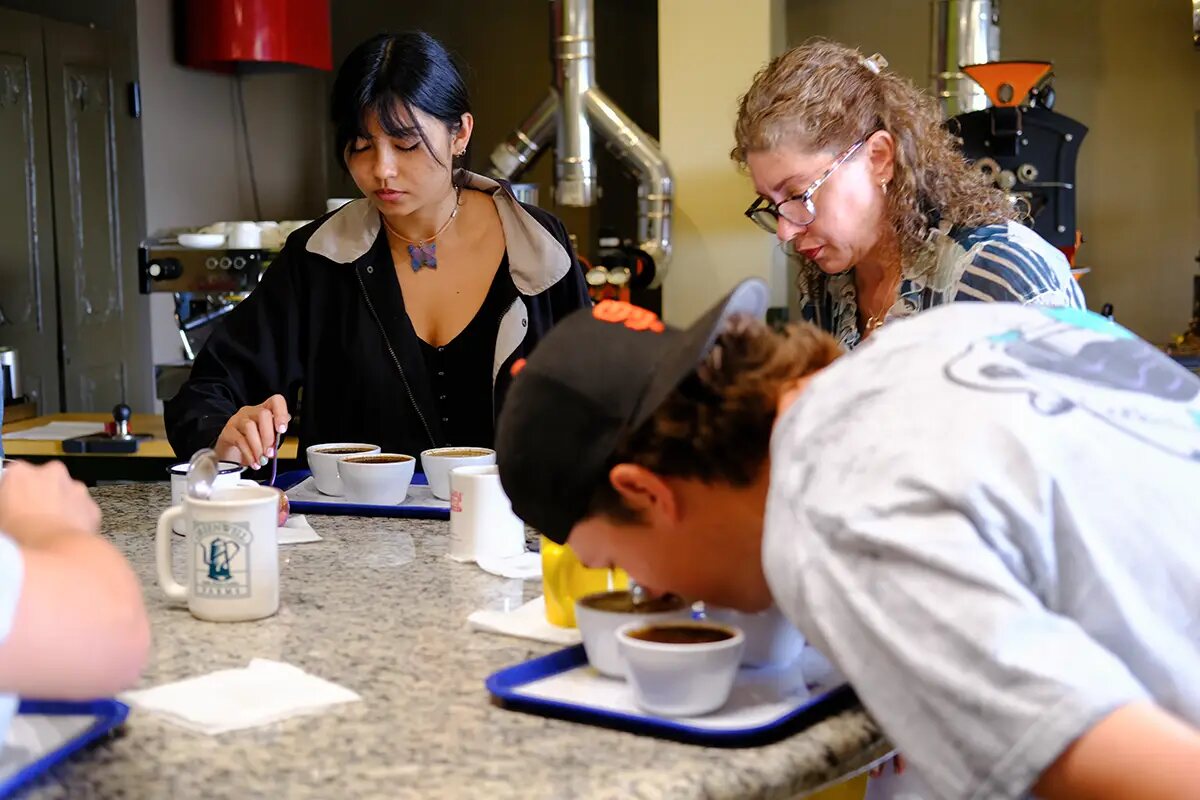 Boot Coffee CampusSCA Q Grader course and exams