Schools in Mallorca
 Anchor & ApronYacht Chef Training — two weeks, with three days and nights aboard a catamaran
- Where
- Mallorca; venue sent 2 weeks ahead
- How long
- 2 weeks
- Format
- Galley teaching, then 3 days and nights aboard
- You leave with
- None — not a Ship's Cook Certificate
- Price
- €3,950 accommodation, meals and villa transfers in; flights and airport transfers out
Two weeks with Cara Whiteman and Amber Colle, working yacht chefs who teach it themselves and publish their own backgrounds. Galley management, provisioning, menus, etiquette and deck duties — plus three days and nights aboard a catamaran. No experience needed. It does not produce a Ship's Cook Certificate; STCW and a medical are separate, compulsory and not included; and no school can promise a job — theirs says a first boat "could take 2 weeks to 3 months." The school is about twenty minutes from Palma; the exact venue goes to students two weeks before the course starts. The 2–16 May 2027 run is sold out, and the school is launching a second, 30 May – 13 June 2027. Both advanced weeks it is running now are full, and the next is in May 2027. A place is held with an €800 deposit, and the rest is paid in instalments. Checked on anchorandapron.co, 7 October 2026, and with the school by email, 6 October 2026.
What the course covers
Two weeks with Cara Whiteman and Amber Colle, working yacht chefs who teach it themselves: galley management, provisioning, menus, etiquette and deck duties — plus three days and nights aboard a catamaran.
Photographs from the school
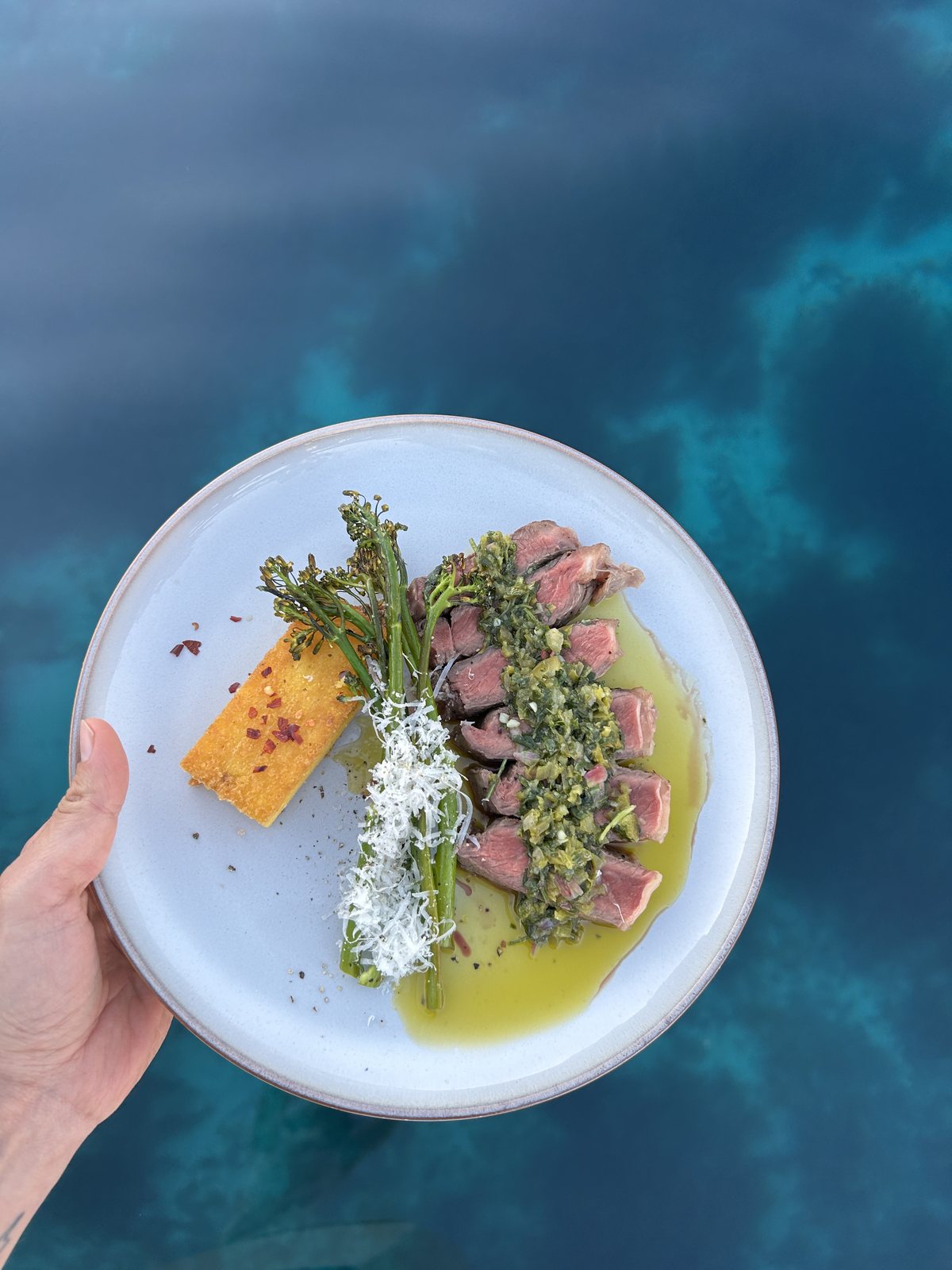
Sent by the school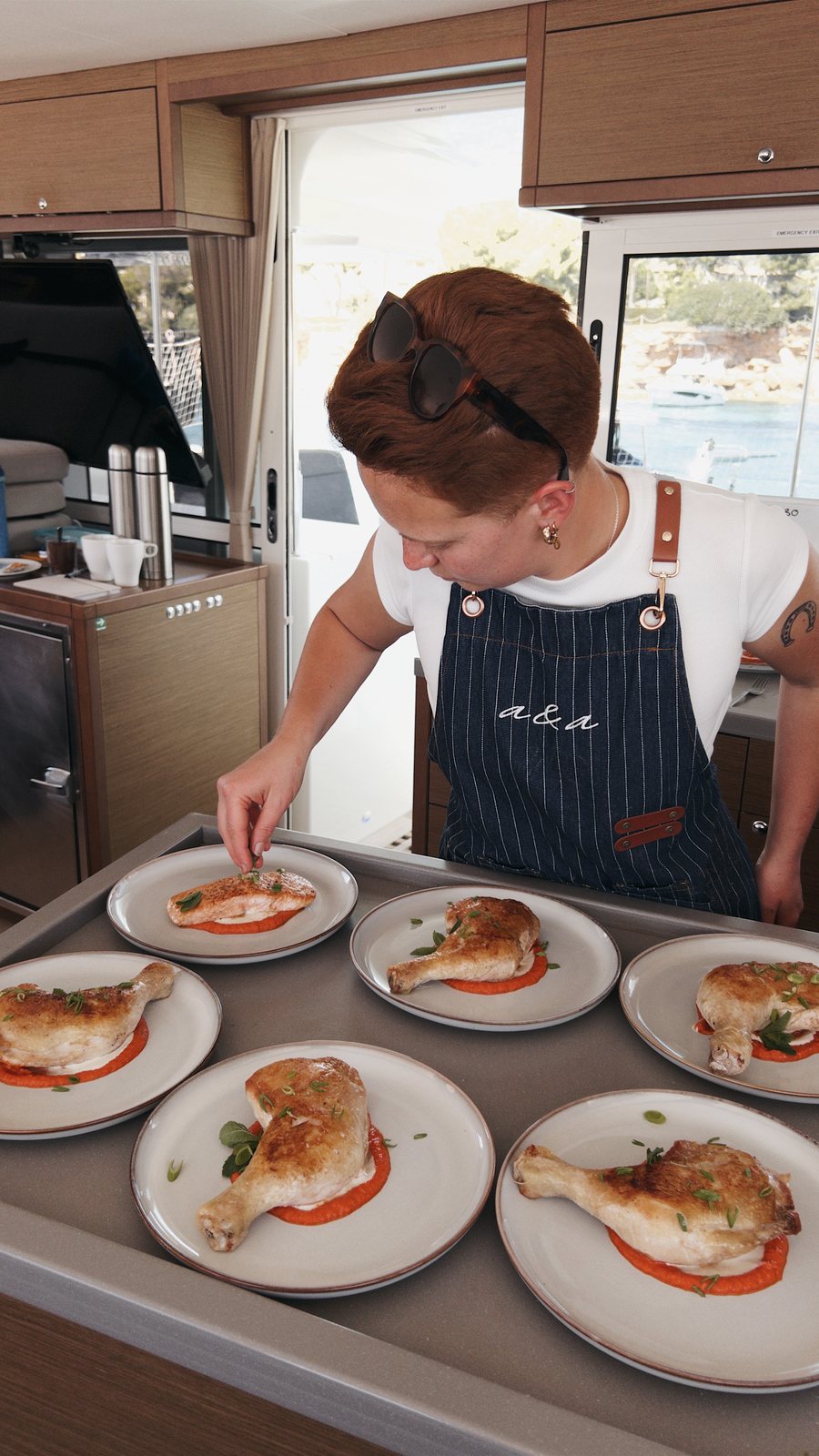
Six plates out of a boat's galley, off Mallorca. 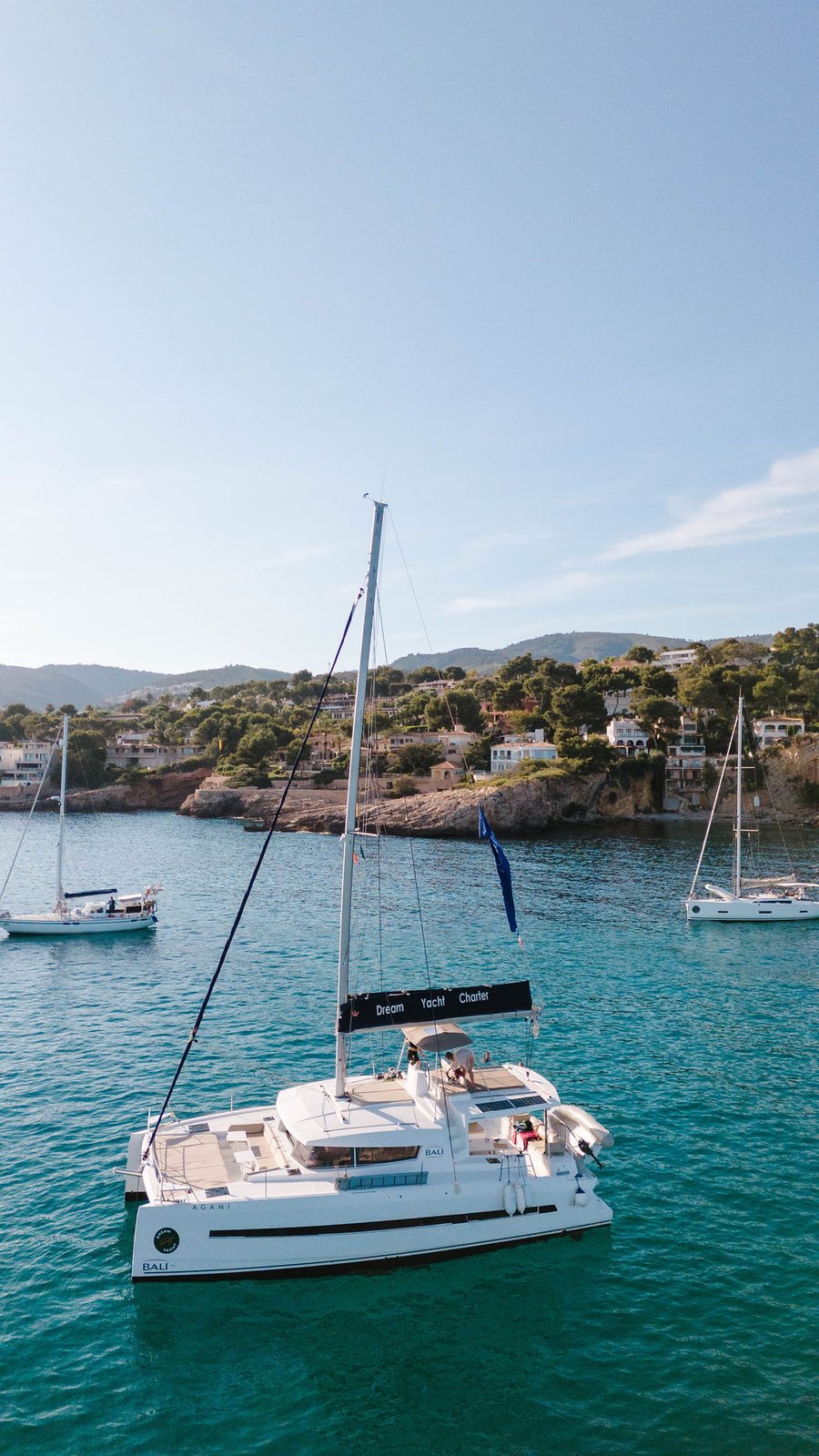
The catamaran, at anchor off Mallorca. Three days and nights aboard are part of the course. 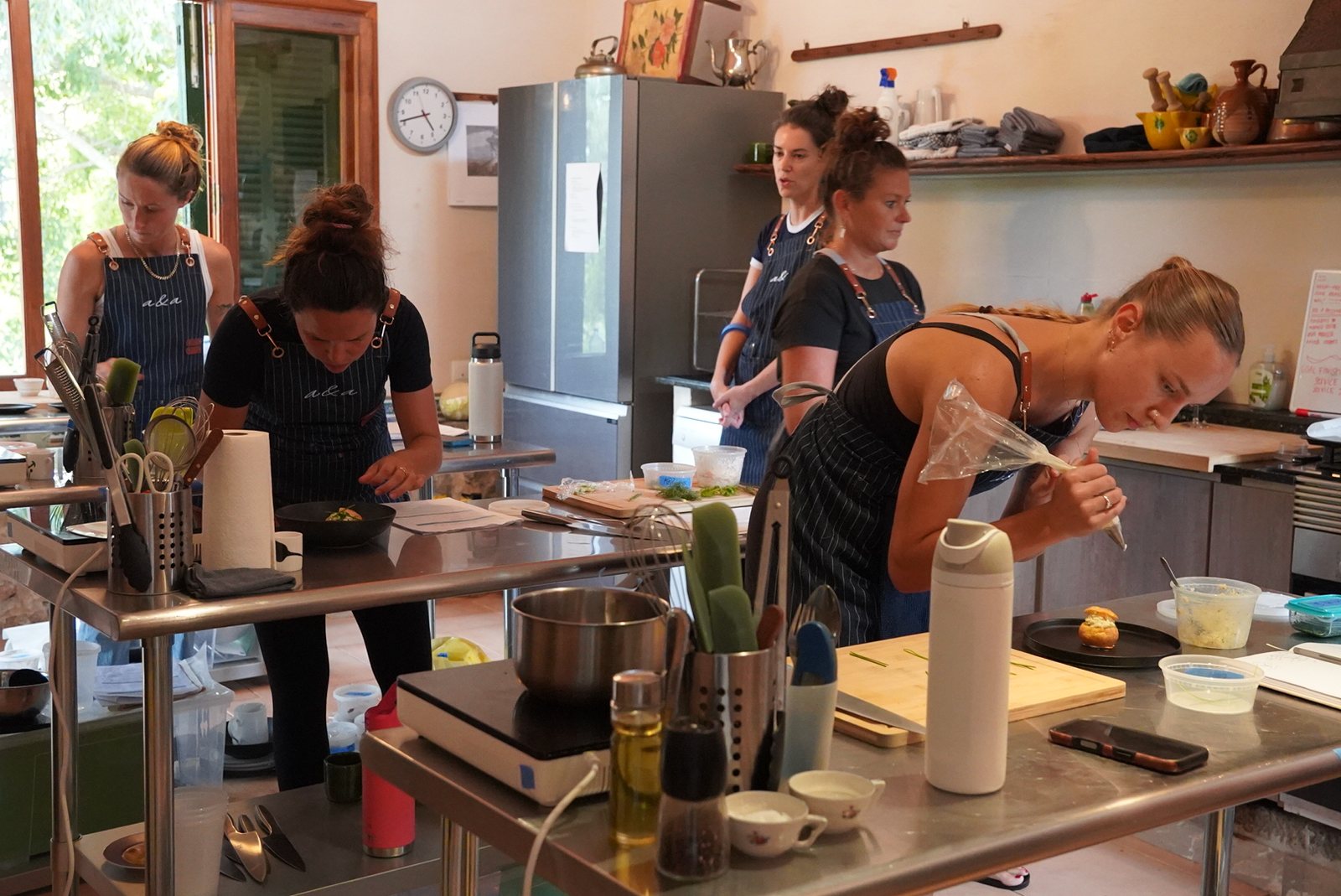
The teaching kitchen ashore. 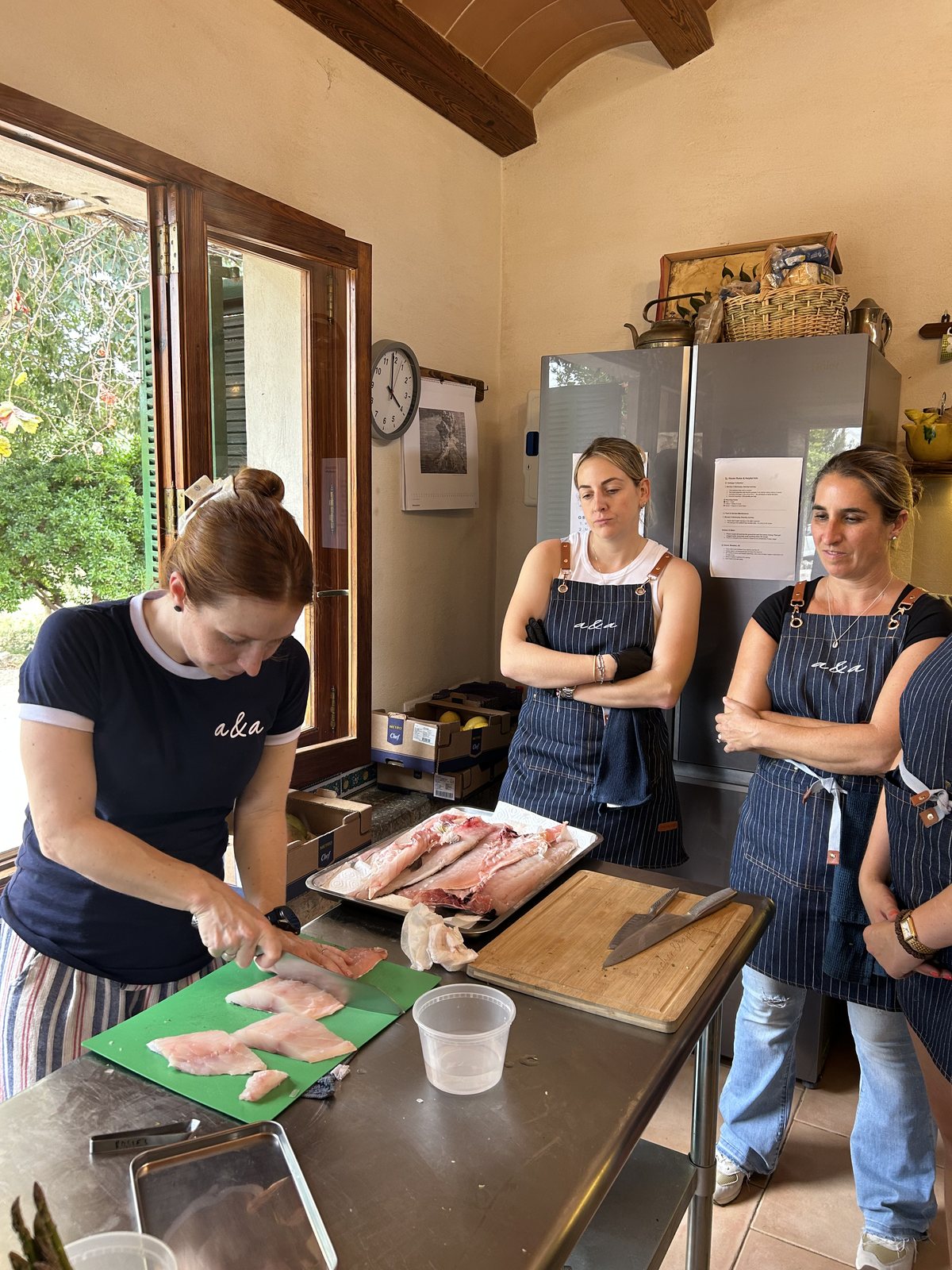
Breaking down a fish, with the next two waiting their turn. 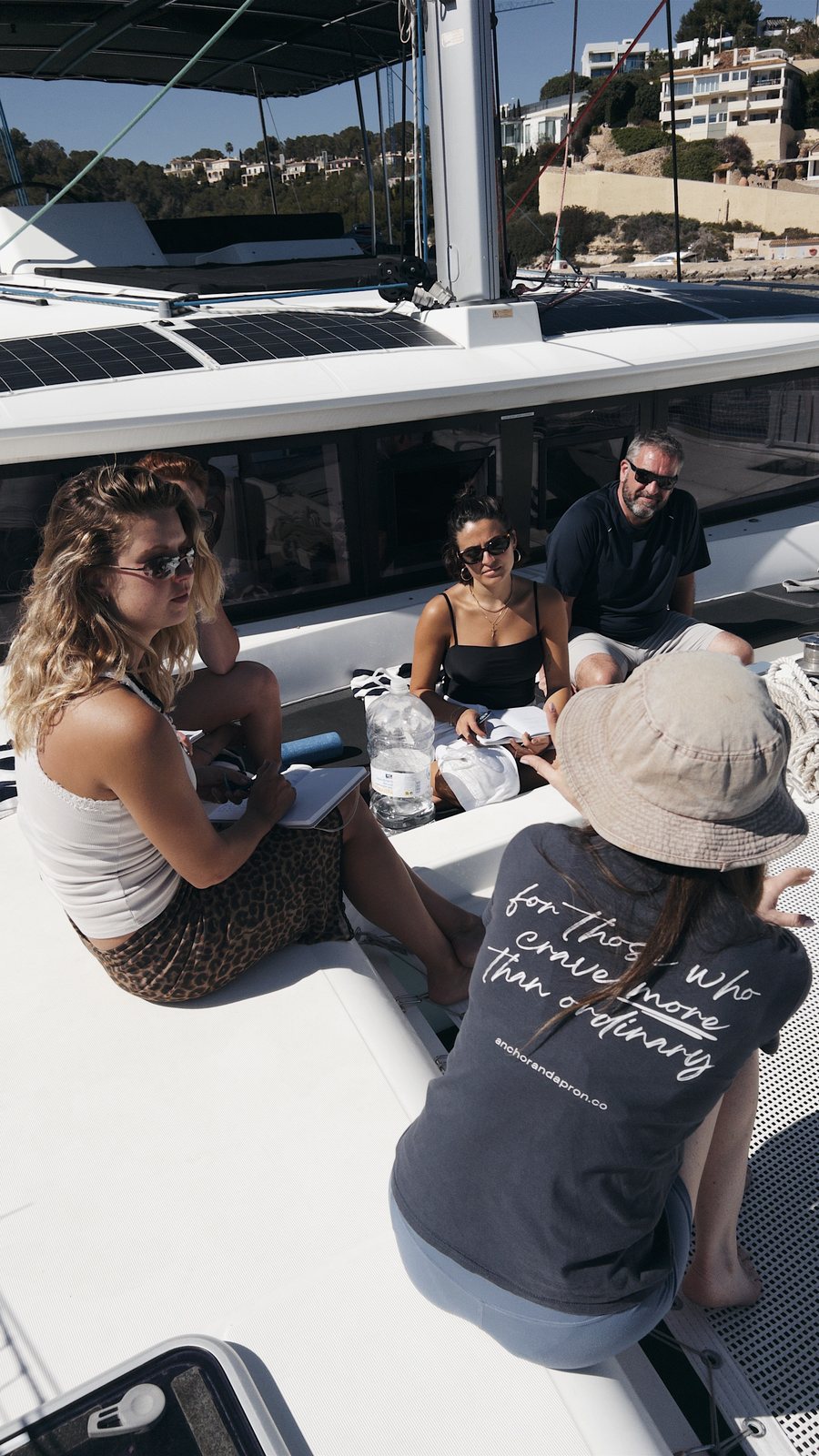
A lesson on the foredeck, notebooks out. Lunch held out over the side, off Mallorca's south-west coast. 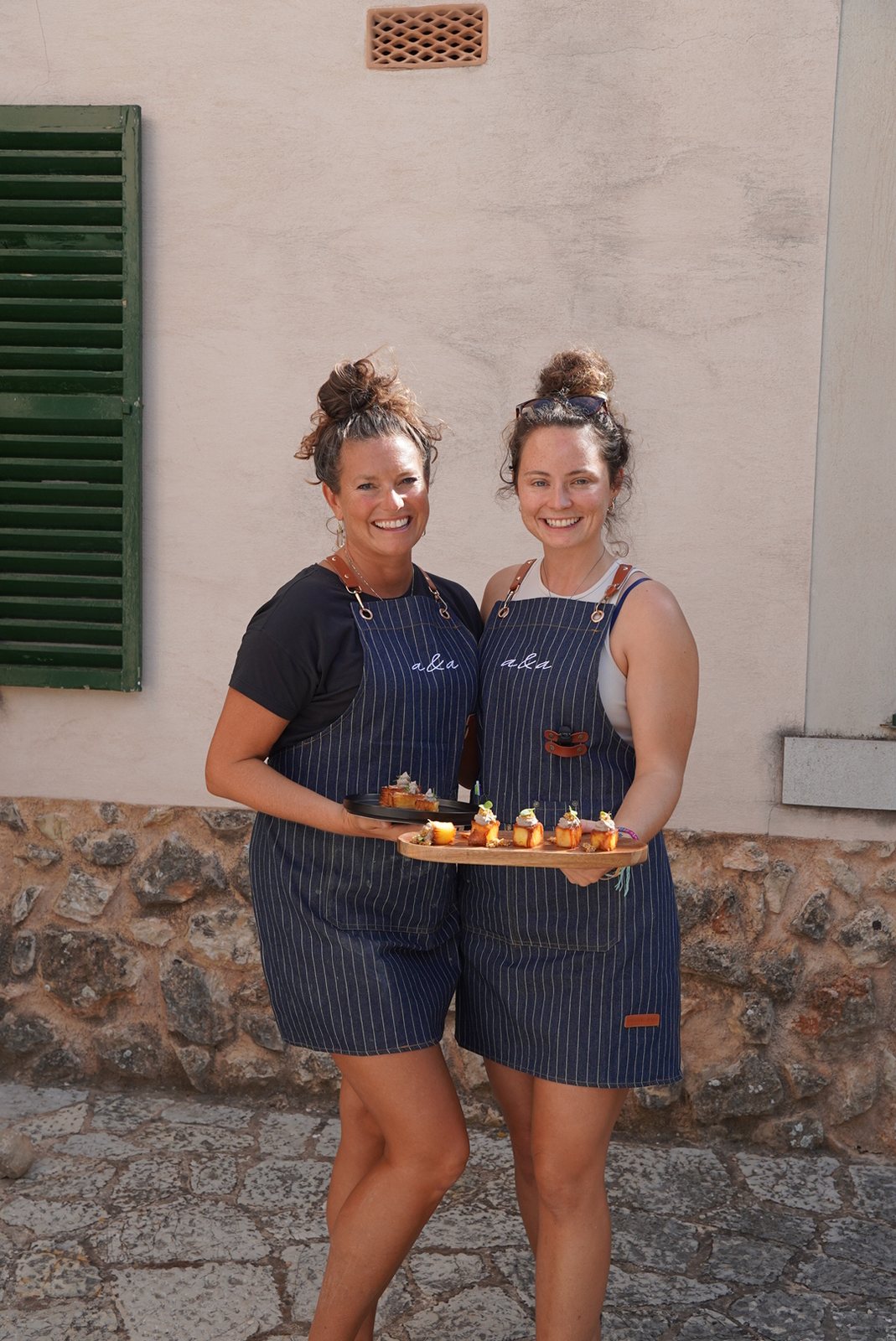
Canapés out to the courtyard, in the school's own aprons. 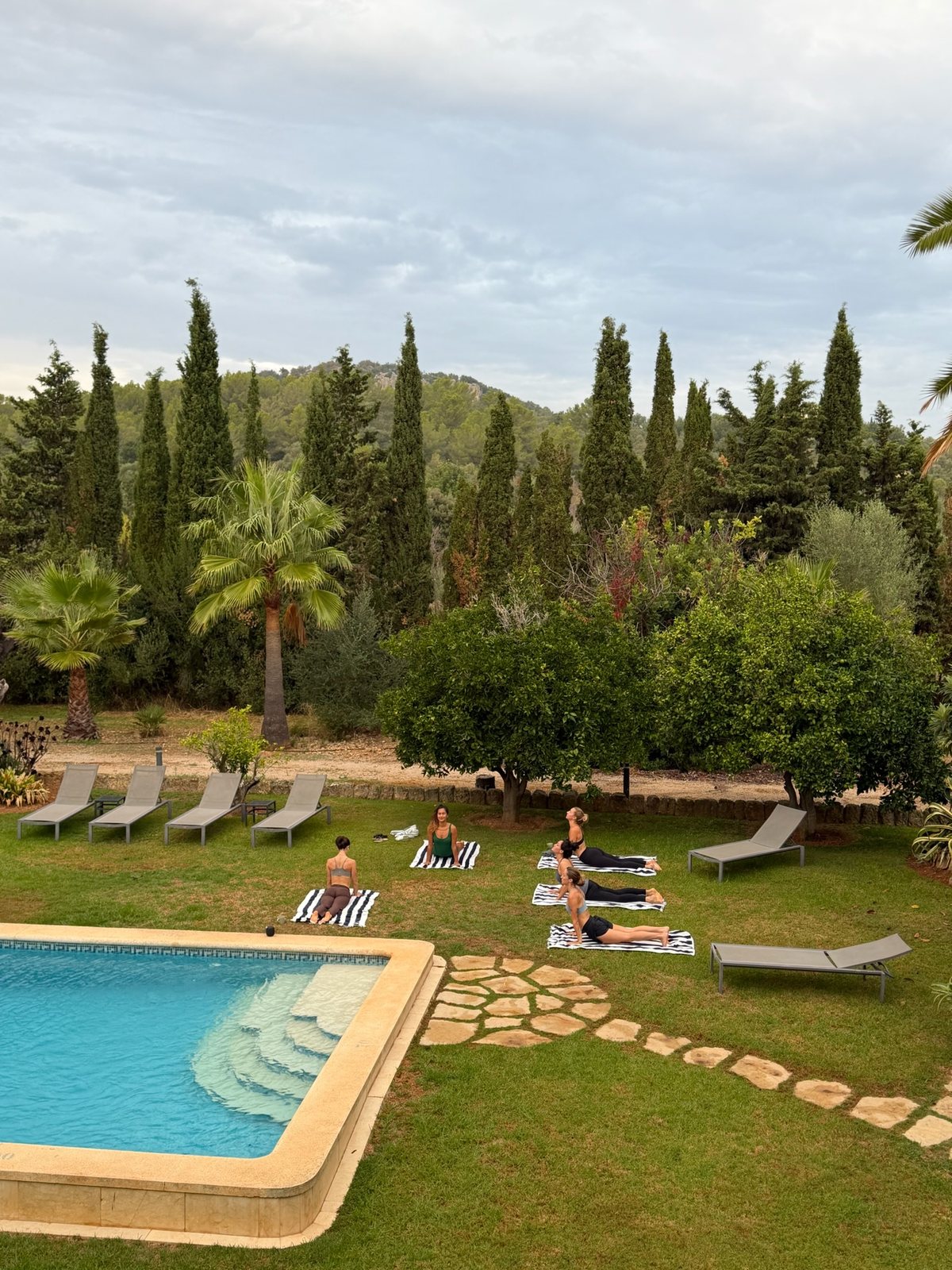
The house where these courses were taught, about twenty minutes from Palma. Its exact address goes to students two weeks before. 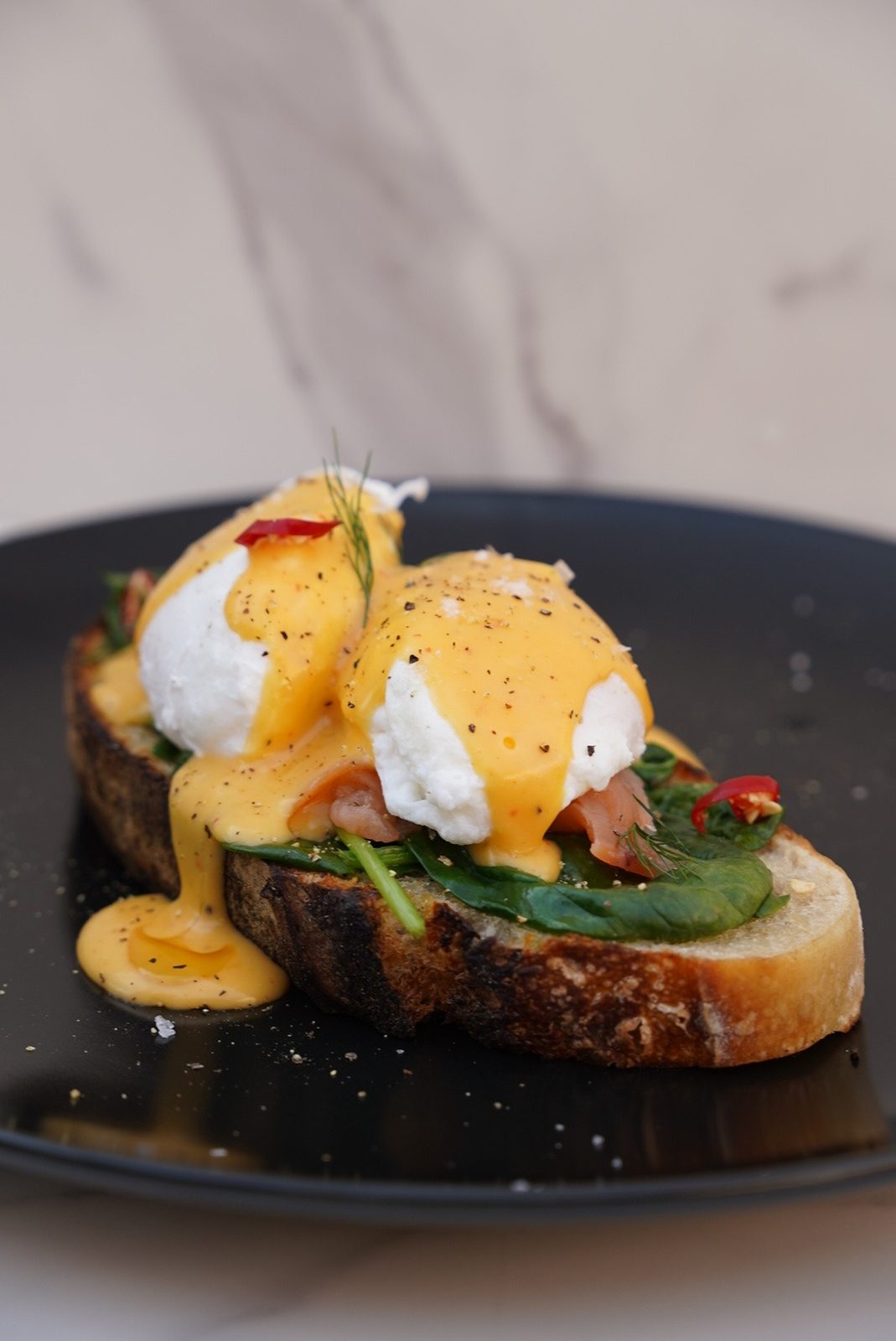
Breakfast, plated. 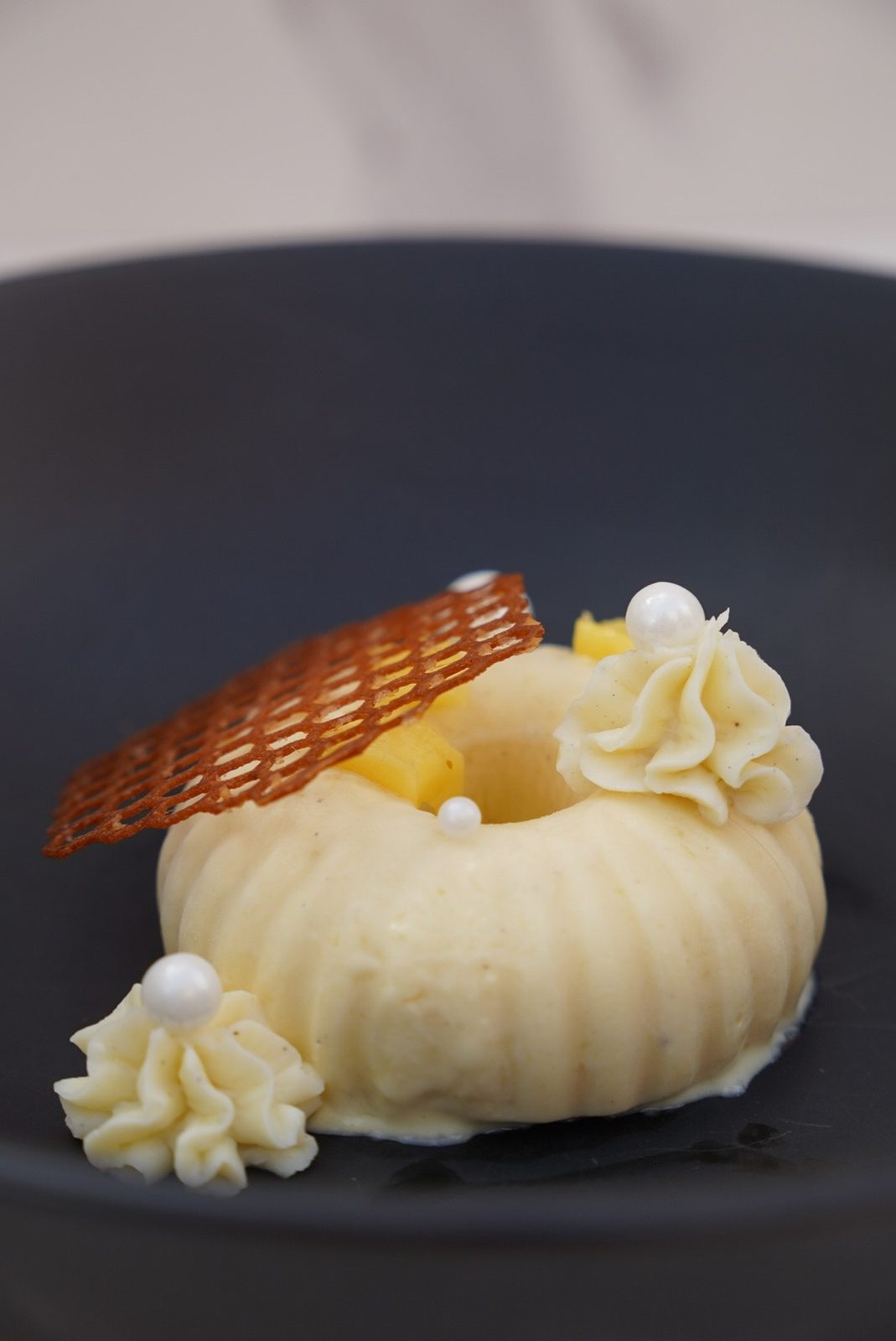
Dessert, plated. 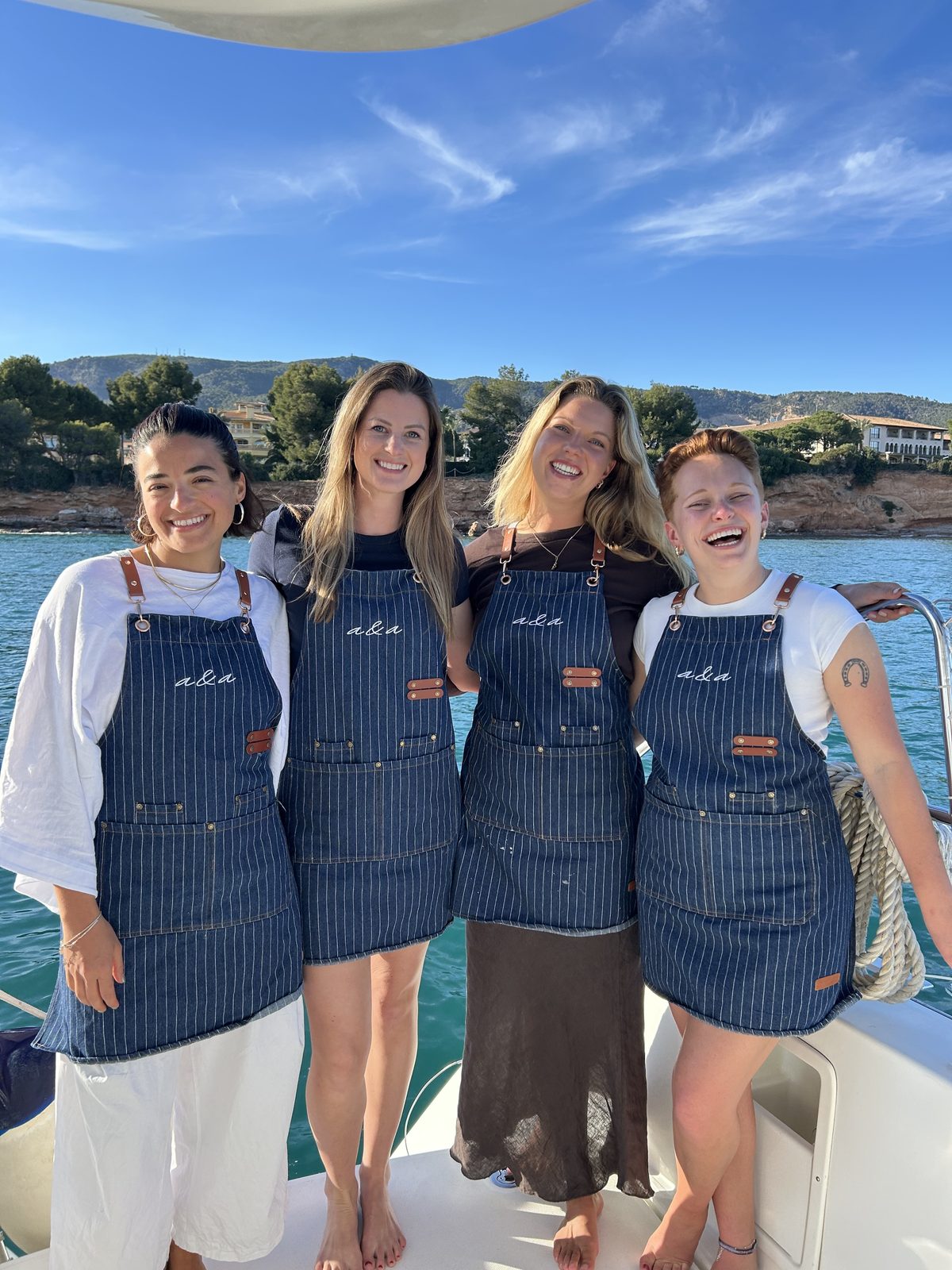
Four of them, in the school's aprons, at sea. 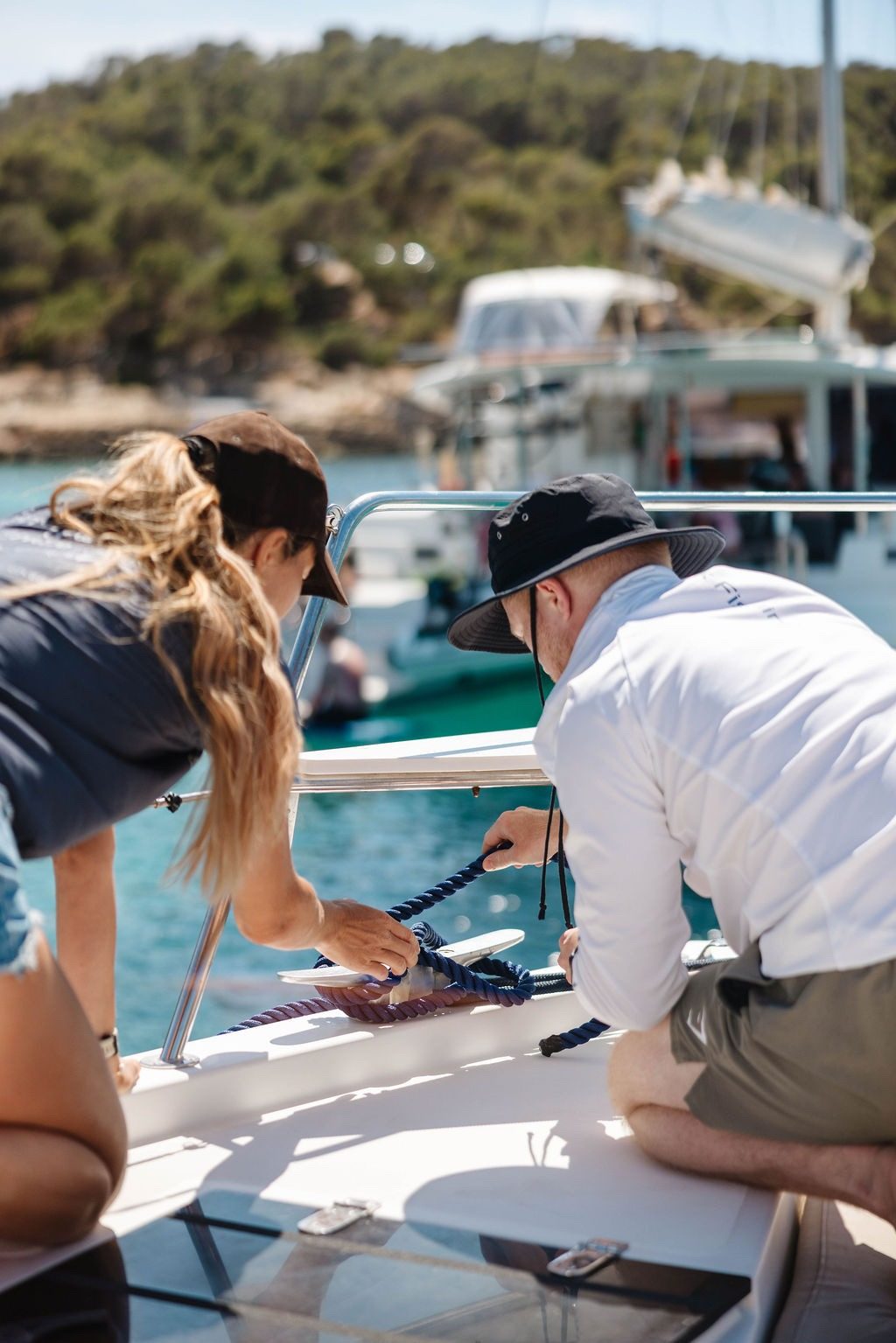
On the lines at the bow. Deck duties are part of the course. 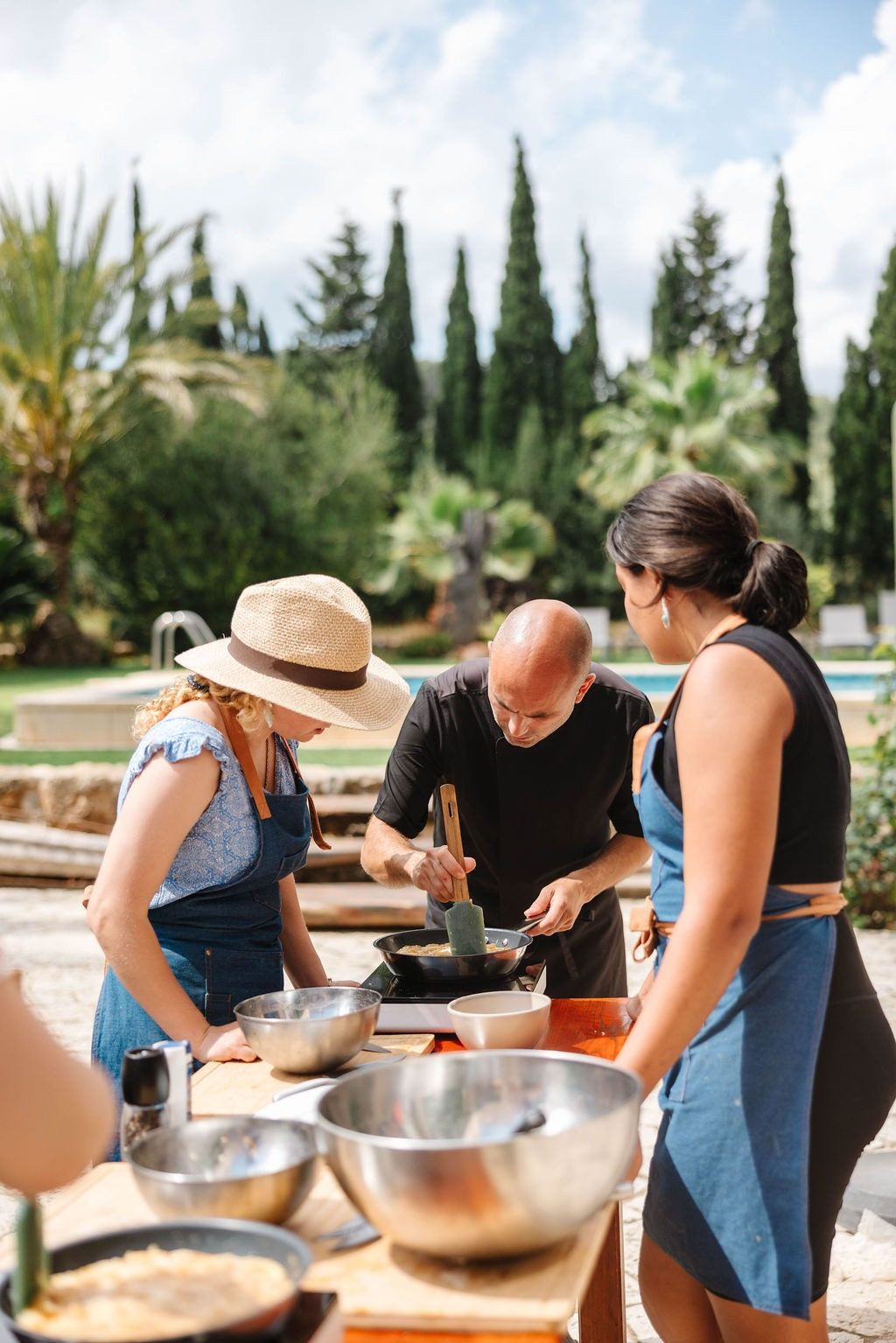
Cooking outside, by the pool. 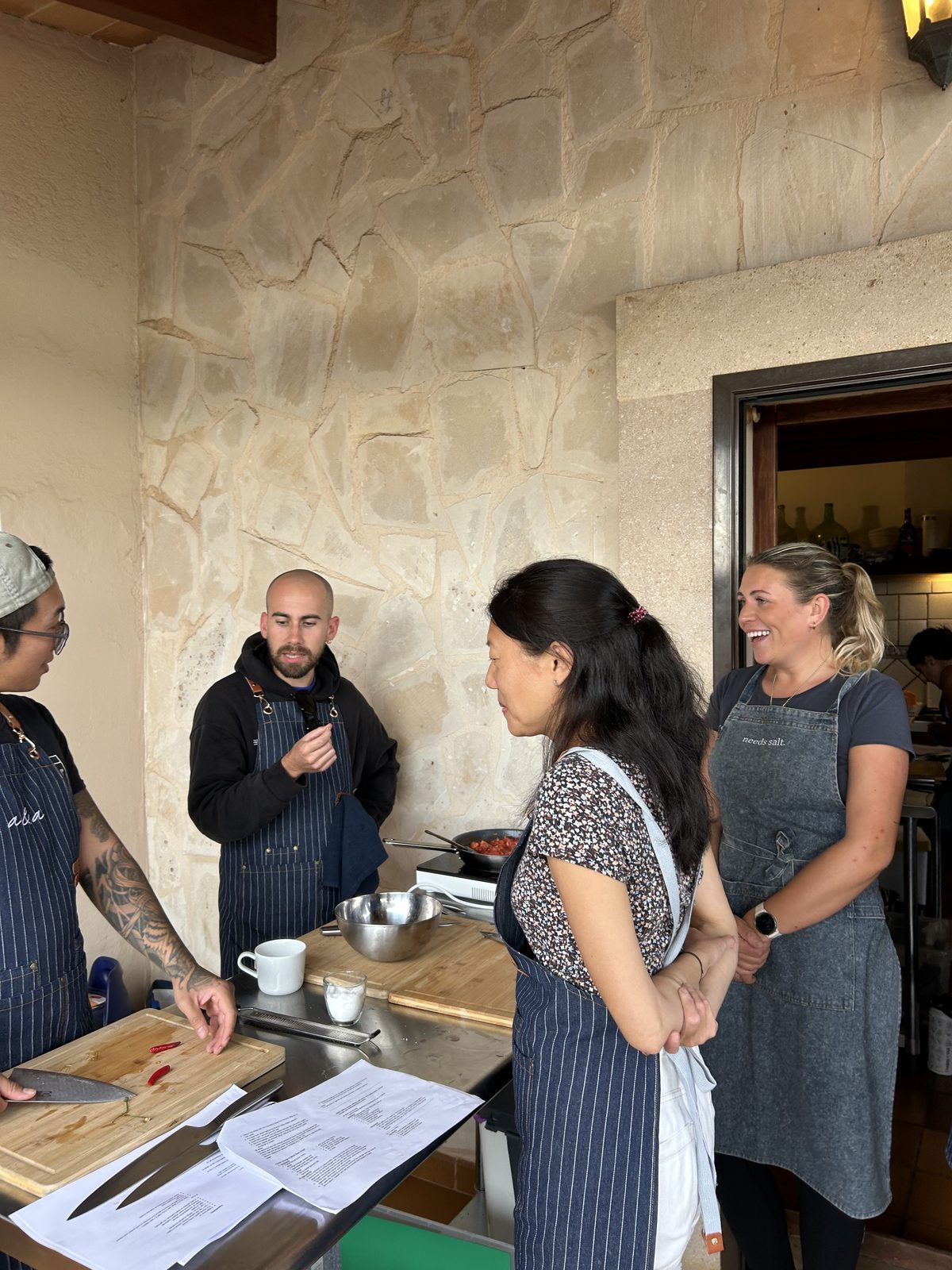
A lesson at the bench. Facts read on the school's own pages, 8 Oct 2026.